
Water Quality & Chlorine
Does Boiling Water Remove Chlorine? What Singapore Households Should Know
Apr
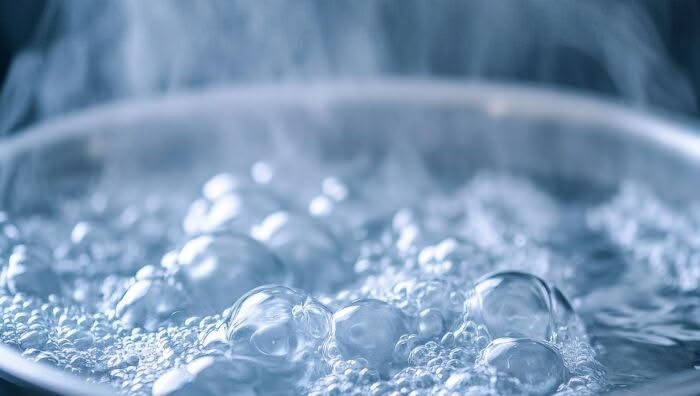
Quick answer: boiling removes free chlorine and does very little to chloramine. Free chlorine is a dissolved gas, so a sustained rolling boil carries it off. Monochloramine is built to survive exactly that, which is why water utilities use it, and a kettle that clicks off at first boil barely touches it. If a page offers you an exact minute count for your kitchen, it is guessing.
People arrive at this question one of two ways. Either the water carries a faint swimming pool note when the kitchen is warm, or their skin feels tight after a shower and boiling looks like the free fix. Before you build a daily habit around a pot on the stove, it helps to know what the heat is actually doing.
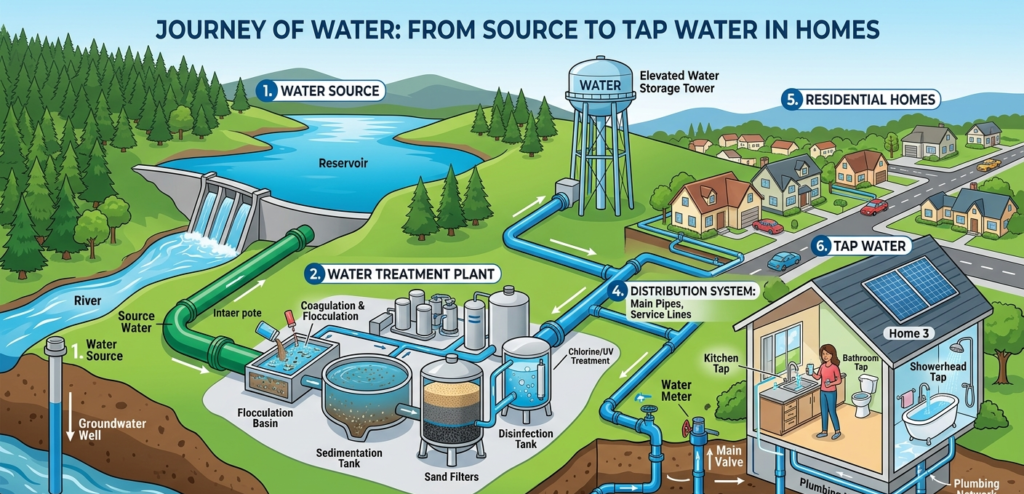
What is in Singapore’s tap water, and why it is there
Treatment here ends with disinfection, and PUB describes that final step plainly: ammonia is added to the treated water to form chloramines, a more stable chlorine residual. One sentence, and it explains most of what follows.
The published figures for January to December 2025 put average total chlorine at 2.27 mg/L, with a range of 1.43 to 2.87. Monochloramine averaged 2.10 mg/L over the same period. So the bulk of what reaches your tap is chloramine rather than free chlorine, which is a distinction most articles on this topic skip entirely.
The reason comes down to distance and time. Free chlorine is reactive and fades as it travels. Chloramine holds its disinfecting power much further along the network, which matters in a city where water passes through service reservoirs, riser mains and rooftop tanks before it reaches a bathroom on the fifteenth floor. That is a sensible engineering trade, and it also explains why treated water still carries a chlorine residual at the point of use.
Does boiling water remove chlorine, or only some of it
Free chlorine behaves the way a dissolved gas should. Heat lowers its solubility, agitation helps it escape, and a rolling boil moves it out of the water and into the air above the pot. Left in an open jug on the counter it will do much the same thing, slowly.
Monochloramine is a different molecule. The chlorine is bound to nitrogen, and that bond is the whole point of using it. The same property that keeps the residual alive across kilometres of pipe works against you at the stove. A kettle that clicks off at first boil shifts far less chloramine than most people assume. Longer boiling does more, but there is no honest single number to quote here, and anyone offering you an exact minute count for your kitchen is guessing.
Boiling has a second effect worth naming. Water leaves as steam and everything non-volatile stays behind, marginally more concentrated than when you started. That matters less here than it would elsewhere, because total hardness averages 42.7 mg/L, which sits comfortably inside the soft band. If the advice you have been reading was written for London or Los Angeles, the mineral picture in Singapore is genuinely different. It is also why a softener solves a problem the local supply does not really present.
The obvious objection: if it is safe to drink, why bother
Fair question, and the answer is not to argue with PUB. Singapore’s drinking water meets WHO guidelines. Over 500,000 tests are run on it annually, in a laboratory accredited by SAC-SINGLAS to ISO/IEC 17025. Nothing on this page disputes any of that, and nobody in Singapore needs to boil tap water for safety.
The useful distinction is exposure, not risk. You drink a couple of litres a day. A single shower runs 60 to 80 litres of warm water across your skin and scalp over roughly ten minutes, and the climate here has plenty of people doing that twice. Safe to drink and optimal for ten minutes of daily skin contact are two separate questions. Only the first one has been answered for you.
The evidence on the second is narrower than most marketing admits. Seki and colleagues, writing in the Journal of Dermatology in 2003, found that chlorinated water at 1.0 and 2.0 mg/L significantly reduced stratum corneum hydration in patients with atopic dermatitis. That is a finding about atopic skin, and stretching it to everyone would be dishonest. If your skin has never complained, that is real information. If it has, the link between chlorine contact and skin irritation is worth reading in full.
Who this matters for, and who can stop reading
Comfortable skin and hair are the signal to leave this one alone. No tightness after towelling off, no itch, no noticeable chlorine smell in the cubicle, and boiling and filtering are both solutions to a problem you do not have. The money is better spent elsewhere.
It is worth a closer look if you have atopic or easily reactive skin, if you colour your hair and watch the tone drift within weeks, if you shower two or three times a day through the heat, or if a small unventilated HDB bathroom concentrates the smell enough that you notice it on entry. Parents of small children with sensitive skin sometimes land here too.
Comfort is the honest claim here rather than treatment, so none of this is medical advice. If a doctor is managing a skin condition for you, their instructions come first and a shower filter sits alongside them at most.
What to do instead of boiling
For drinking, boiling is not the lever. If the taste bothers you, a carbon filter jug or a covered jug rested in the fridge overnight does more with less effort, and neither is needed for safety. If you are weighing a bigger purchase for the kitchen, a drinking-water purifier and a shower filter answer two different questions. Boil the kettle because tea needs boiling water, not because you are treating the supply.
For showering, the arithmetic settles it. Nobody is boiling 70 litres before stepping in. The only practical place to deal with chlorine you are standing under is at the point of use, in the second between the pipe and your skin, which is the entire job of an inline filter fitted at the shower.

There are two routes. Suited to anyone happy with their existing shower head, the universal retrofit filter at S$49.90 threads in between the hose and the head and fits standard HDB and condo hardware. If the head itself is past its best, the Radiance handshower at S$149 builds the filter housing into the handle, adds the Aera Flow spray plate, and ships with one Vitae refill. The choice between a filtered head and a separate inline filter comes down to whether you want the spray changed as well.
Plan for the consumable. Each Vitae Infusion refill holds 25,000 mg of vitamin C, which helps neutralise chlorine as water passes through, and lasts two to three months depending on how many people use the shower and how long they linger. Refills run S$29.90 each, or three for S$74.90. Before buying, be clear on what a shower filter does and does not address. It is not whole-home water treatment and does not pretend to be.
Frequently asked questions
How long do you have to boil water to remove chlorine?
Longer than a kettle runs. Free chlorine falls steadily under a sustained rolling boil, faster the more vigorous the boil. Monochloramine is slower by a wide margin. Starting concentration, pot shape, volume and boil intensity all move the result, so no single minute count is honest. Treat boiling as a partial measure, not a removal method.
Does letting water stand uncovered remove chlorine?
Free chlorine will off-gas from an open container over several hours at room temperature. Chloramine largely will not. That is why the old aquarium advice about standing water overnight stopped working once utilities moved to chloramine, and why anyone keeping fish should use a proper dechlorinator rather than patience.
Do I need to boil tap water in Singapore for safety?
No. PUB’s water meets WHO guidelines and is safe straight from the tap. Boiling for safety is a habit imported from places where it is necessary. Here it is optional, and the reason people ask about it is usually taste or smell rather than risk.
Why is the chlorine smell stronger in the shower than at the sink?
Heat and spray. Warm water and the mechanical break-up of the stream release more of the volatile fraction into a small room that often has one extractor fan and no window. Water temperature changes how much chlorine you meet, which is worth knowing if you shower hot by default.
Is a vitamin C filter the same as a carbon filter?
Different mechanisms. Carbon adsorbs, holding chlorine on a porous surface until the medium is spent. Ascorbic acid reacts with it chemically, converting the residual into far less reactive products at the moment of contact. Contact time inside a shower head is very short, which is part of why the reactive approach suits shower flow rates.
Does a SUHAE filter mean replacing my shower head?
Not necessarily. Built to sit between a standard hose and whatever head you already own, the S$49.90 universal filter is the retrofit route, and the handshowers are for people who want to change the spray as well as the water. Warranty covers functional parts only, not labour or transport.
References
- PUB, Singapore Drinking Water Quality, January to December 2025. pub.gov.sg
- PUB, Water Treatment. pub.gov.sg
- PUB, Water Quality. pub.gov.sg
- Seki T et al. Free residual chlorine in bathing water reduces the water-holding capacity of the stratum corneum in atopic skin. J Dermatol, 2003. PMID 12692355. pubmed.ncbi.nlm.nih.gov
If you came here about drinking water, the useful answer is that boiling is the wrong tool, and you do not need it for safety. Rest a covered jug in the fridge overnight if the taste bothers you, and boil the kettle because tea needs boiling water.
The arithmetic only changes in the bathroom. Nobody boils seventy litres before stepping in, and a shower holds water against skin and hair for far longer than a glass ever touches you. That is the one place worth handling at the point of use rather than on the stove. See whether a universal retrofit filter fits the shower you already have.
