
Water Quality & Chlorine
What Most People Don’t Know About Shower Water in Singapore
Apr
Quick answer: Shower water quality in Singapore is high by any international measure, and the surprising part is not that something is wrong with it. It is that the water arriving at your shower head carries a deliberate chloramine residual averaging 2.10 mg/L, that it is soft rather than hard, and that a drinking water standard says nothing about ten minutes of daily skin contact at 40 degrees. Those three facts explain almost every complaint people have about their showers here.
Ask around and you will hear confident claims in both directions. One camp insists the water here is hard and wrecks hair. The other says the water is perfect and anyone selling a filter is running a scam. PUB publishes enough data to settle both arguments, and neither camp comes out of it well.
The three numbers that describe your shower water
PUB’s drinking water quality summary for January to December 2025 gives figures rather than adjectives, and three of them matter for showering.
Total chlorine, average 2.27 mg/L, measured range 1.43 to 2.87. This is the disinfectant residual, and it is present by design.
Monochloramine, average 2.10 mg/L. Most of that residual is bound to ammonia rather than free. PUB puts the reason plainly: “Ammonia is added to the treated water to form chloramines, a more stable chlorine residual.” Stability is the whole point, because the water still has kilometres of pipe to cross.
Total hardness, average 42.7 mg/L. That is soft water. Not borderline, not moderately hard. If someone has told you your hair is dull because of Singapore’s hard water, they were guessing, and we went through what PUB’s hardness numbers actually show in detail elsewhere. pH averages 8.0, mildly on the alkaline side.
What happens between the treatment plant and your shower head
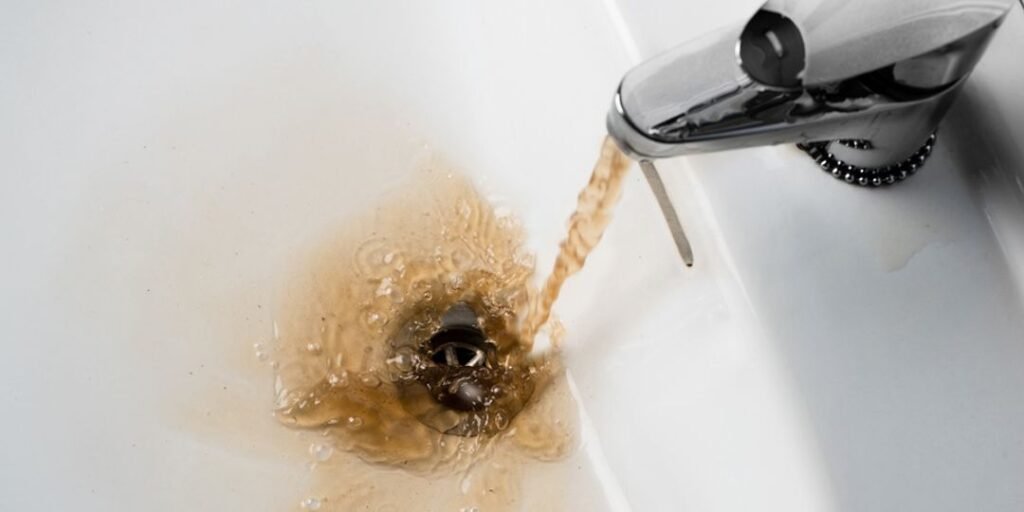
Discoloured water is what most people picture when they imagine a water problem, and in Singapore it is rare and usually traceable to works on the line or a disturbed sediment layer after a repair. If you ever do see it, that is a call to your building management or PUB, not a reason to buy anything.
The ordinary story is duller and more useful. Water leaves the plant, travels through service reservoirs and mains, climbs a riser in your block, and sits in the last few metres of pipe overnight while nobody uses it. Water age is one of the reasons the water at your shower head differs slightly from the water leaving the plant, why the first ten seconds of a morning shower often smell different from the rest, and why the residual measured at your tap sits somewhere inside a range rather than at one fixed number.
Then the shower head does something no other fixture in the flat does. It breaks the stream into thousands of droplets, multiplying the surface area between water and air, at a temperature that makes volatile compounds leave the liquid faster. That is the mechanism behind the smell, and it explains why the chlorine smell shows up in the bathroom and not at the kitchen sink.
The objection: this sounds like fear-selling
It would be, if the argument were that Singapore’s water is unsafe. It is not. The supply meets WHO guideline values, is tested continuously, and is safe to drink straight from the tap. We agree with PUB on every one of those points and have no interest in persuading anyone otherwise.
The narrower claim is the only one that holds up. Drinking water standards were written for ingestion, roughly two litres a day through a digestive system equipped for it. They do not describe ten minutes of daily contact between warm chloraminated water and a lipid barrier that is temporarily swollen and permeable. Safe to drink is not the same question as optimal for prolonged skin contact, and only one of those has a regulator behind it.
The evidence on skin is worth quoting accurately rather than selectively. Seki and colleagues, in the Journal of Dermatology in 2003, found chlorinated water at 1.0 and 2.0 mg/L significantly reduced stratum corneum hydration in patients with atopic dermatitis. That is a specific population and the finding should stay there. Perkin and colleagues in 2016, in the Journal of Allergy and Clinical Immunology, concluded that chlorine’s influence remains uncertain. Anyone presenting this literature as settled is misreading it. The fuller picture on how daily tap water contact affects skin hydration is worth reading alongside this.
Who this is for, and who can stop reading
Worth acting on if you shower twice daily because of the humidity, if your skin tightens within half an hour of towelling off despite a decent moisturiser, if you have diagnosed eczema in the household, if you colour or chemically treat your hair, or if the bathroom has no window and the smell registers every morning.
The case rests on something already bothering you. If nothing is, there is no urgency. Comfortable skin needs no intervention, and there is no upside waiting for someone without a complaint. It is also the wrong purchase if your real concern is drinking water, since a shower device changes one outlet and leaves the kitchen untouched. And if hair shedding is the actual worry, water is rarely the main variable, which we set out honestly in what shower water can and cannot do to hair loss.
Practical changes, in order of cost
- Let the line run for ten seconds before stepping in, especially first thing in the morning.
- Drop the temperature until the water reads warm rather than hot. Heat drives both odour and barrier stress.
- Run the extractor for the full shower and a few minutes after, since concentration in a small room is the real problem with the smell.
- Cut the length of the shower. Exposure is concentration multiplied by minutes.
- Moisturise onto slightly damp skin within about three minutes of finishing.
- Descale or replace a shower head that has been in service for years, since a clogged plate distorts spray pattern and pressure long before it affects water quality.
Give those a fortnight. If hair is the main complaint rather than skin, the same measures apply and the reasoning is set out in how local water quality influences hair moisture.
Where a filtering shower head fits
Only after the free measures have been tried does hardware make sense, and then only because it changes the one variable the others cannot touch.
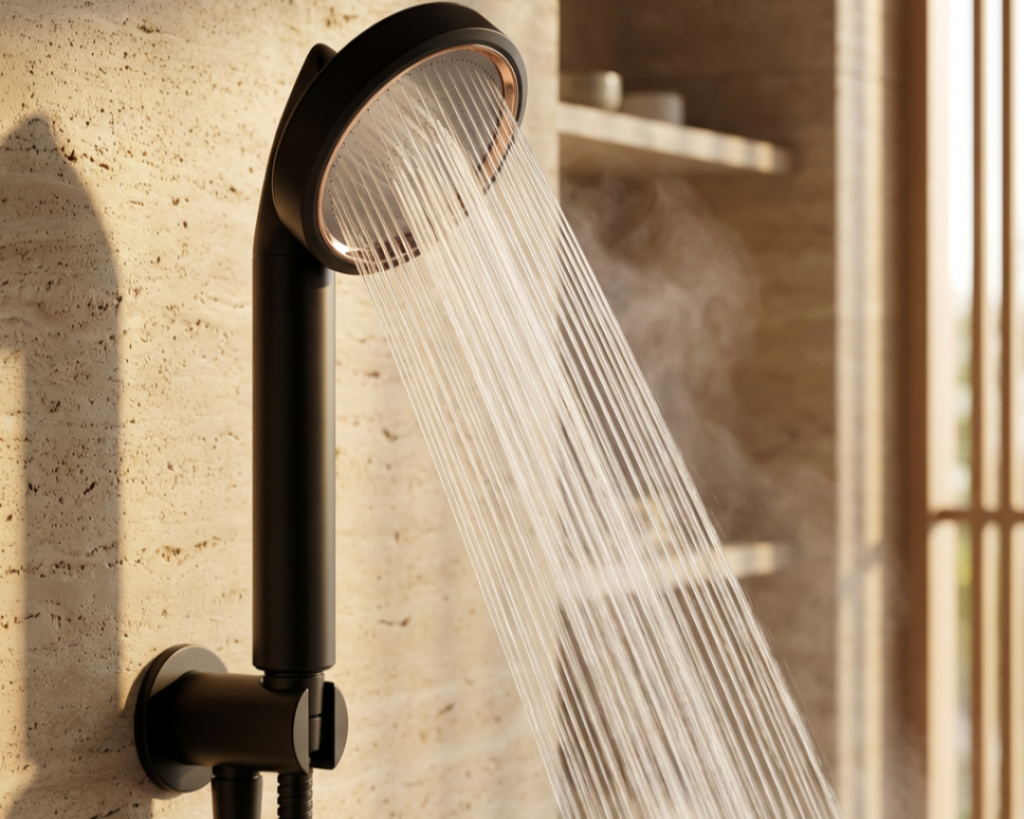
Sitting at the last metre of the network, the Vitae Infusion cartridge carries 25,000 mg of vitamin C and helps neutralise the chlorine residual as water passes through it. It helps neutralise. It does not remove all of it, and a filter sold on that promise is one to be sceptical of. The vitamin C shower head range starts with the Nourish at S$99, then the Radiance handshower at S$149 and the Aura overhead at S$249, each pairing the cartridge with the Aera Flow spray plate and the Purea Core filtration stage. Vitae refills cost S$29.90 each, or three for S$74.90, and one lasts two to three months in normal household use.
Keeping your existing head is also an option. Priced at S$49.90, the universal retrofit filter threads between hose and head instead. Either way, the sober assessment of whether a shower filter is worth it here is a better place to start than a product page.
Frequently asked questions
Is shower water quality in Singapore different from drinking water?
It is the same water from the same supply. What differs is the exposure: droplets, heat, a small enclosed room, and skin that is warm and permeable for ten minutes.
Does Singapore have hard water?
No. PUB reports an average total hardness of 42.7 mg/L, which classifies as soft. Limescale is not the explanation for dry skin or dull hair here.
Should I worry about my building’s water tank?
Storage tanks in residential buildings are subject to scheduled cleaning and inspection. Persistent discolouration or an unusual odour is a matter for building management or PUB rather than a consumer product.
Why does the smell vary through the week?
The published chlorine range of 1.43 to 2.87 mg/L means the residual genuinely fluctuates, and water sitting unused in a riser overnight behaves differently from water drawn during peak demand.
Will a filter help if my real problem is weak pressure?
Filtration and pressure are separate problems with separate fixes, and the reasoning behind why stronger is not always better in a shower is worth reading before changing anything.
Can I see a SUHAE shower head before buying one?
Yes. The showroom is at T-Space, #01-18, 1 Tampines North Drive 1, Singapore 528559, and you can reach the team on +65 8988 1336 or at admin@suhae.sg. Warranty covers functional parts only, not labour or transport.
References
- PUB, Singapore Drinking Water Quality, January to December 2025. pub.gov.sg
- PUB, Water Treatment, on ammonia and chloramine formation. pub.gov.sg
- Seki T et al. Journal of Dermatology, 2003. PMID 12692355. pubmed.ncbi.nlm.nih.gov
- Perkin MR et al. Journal of Allergy and Clinical Immunology, 2016. PMID 27241890. pubmed.ncbi.nlm.nih.gov
If the free adjustments have run out of road and you want to change the water itself, compare the three vitamin C shower heads side by side and see which mounting and spray suits your bathroom before you decide.
