
Water Quality & Chlorine
Signs Your Shower Water Has Too Much Chlorine in Singapore (And What You Can Do)

Apr
Quick answer: The usual signs of chlorine in shower water are unglamorous and easy to blame on something else: a swimming pool smell that sharpens as the water heats, skin that feels tight within minutes of towelling off, hair that dries rough or loses tone faster than it used to, and a scalp that stays itchy no matter which shampoo you buy. None of that means your water breaches a standard. It means the disinfectant residual PUB maintains for public health, averaging 2.27 mg/L in 2025, is more than some skin enjoys meeting twice a day.
By the time anyone suspects the water, they have usually changed shampoo twice, bought a thicker moisturiser and blamed the office aircon. Those are reasonable suspects. Water is simply the one nobody audits, because it arrives certified and there is no visible reason to question it.
The common signs of chlorine in shower water
Ranked roughly by how often people notice them first.
- A pool smell that only appears in the cubicle. The kitchen tap smells of nothing. The shower, five minutes in, smells faintly of a swim carnival. Heat and spray drive the volatile fraction into a small room, which is why the smell concentrates in the shower and nowhere else.
- Tightness that starts before you have finished drying. Not itch, not redness, just the sensation that your face is one size too small. It fades once moisturiser goes on, then returns tomorrow.
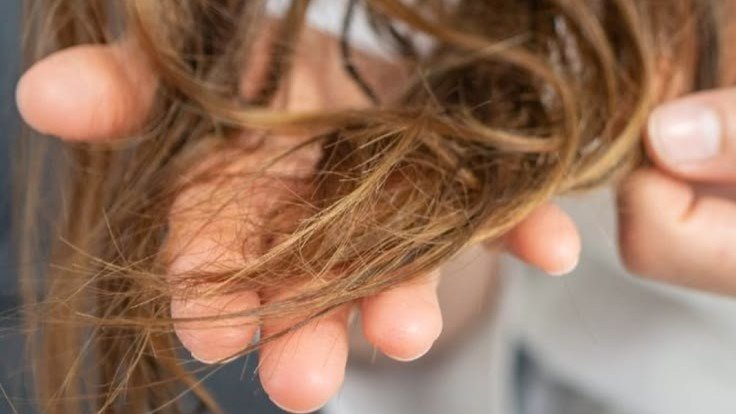
- Hair that feels rough at the mid-lengths. Conditioner works for an afternoon. Colour drifts warm or dull sooner than your salon predicted.
- A scalp that itches without visible flaking. Worth a doctor’s opinion rather than a guess, but it is a pattern people report.
- The holiday test. Everything settles for a week away, then resumes within days of coming home. That is the single most telling observation on this list, because it isolates the variable.
The mechanism, briefly
PUB disinfects, then does one more thing that most people never read about. In its own description of the process, ammonia is added to the treated water to form chloramines, a more stable chlorine residual. Stability is the goal. A residual that survives the journey through service reservoirs, riser mains and rooftop tanks keeps the water protected all the way to a bathroom on the twelfth floor.
The published numbers for January to December 2025: total chlorine averaged 2.27 mg/L with a range of 1.43 to 2.87, and monochloramine averaged 2.10 mg/L. So most of what arrives at your shower head is chloramine. It does not off-gas as readily as free chlorine, and it does not disappear if you let the water run for a minute first. That is by design, and it is the reason treated water still carries a residual at the point of use.
Then there is contact. Warm water softens the skin barrier and lifts the hair cuticle slightly, which is what makes a hot shower feel good and also what increases interaction with whatever is dissolved in the stream. Sixty to eighty litres, ten minutes, most days, often twice in this climate. Duration is doing more of the work here than concentration.
Before the objection: Singapore’s water is exceptionally well managed
It is, and that is not a concession. PUB runs over 500,000 tests a year in a laboratory accredited to ISO/IEC 17025 by SAC-SINGLAS, and the water meets WHO guidelines. Anyone selling you a filter on the argument that Singapore tap water is dirty is either uninformed or hoping you are.
The honest argument is narrower. Drinking standards are written around ingestion, a couple of litres a day passing through a digestive system built to handle it. They are not written around ten minutes of warm, direct skin contact repeated daily for years. Those are different exposures with different questions attached, and the second one is largely left to you.
Published evidence on that second question is thinner than the category likes to admit. Seki and colleagues, in the Journal of Dermatology in 2003, found that chlorinated bathing water at 1.0 and 2.0 mg/L significantly reduced stratum corneum hydration in patients with atopic dermatitis. That was a study in atopic skin. It does not license a claim about everyone, and the relationship between chlorine and skin irritation deserves the caveats.
Who this is for, and who it is not for
Not for you if none of the signs above ring true. Comfortable skin after a shower is the answer to the question, and no filter improves on comfortable. The same goes if your dryness has an obvious cause you have not yet dealt with, such as a foaming cleanser used twice daily, water hot enough to redden the skin, or eight hours under an office vent. Fix the cheap variables first. Dermatology guidance on dry skin covers most of them and costs nothing.
Worth considering if you have atopic or reactive skin, if you maintain colour-treated hair, if you shower two or three times a day, if the holiday test came back positive, or if the smell in your bathroom is strong enough that guests mention it. Households with young children often notice it on the children first.
One boundary, stated plainly. A shower filter is a comfort measure. It treats no condition and cures nothing, and if a doctor is managing your skin, their plan comes first.
What actually helps
Start with the free changes and give them three weeks. Drop the temperature until the water is warm rather than hot. Shorten the shower. Move to a non-foaming cleanser and apply moisturiser while the skin is still damp. Wash hair less often than instinct suggests in this humidity, and rinse cool at the end. Plenty of people stop here, and that is a real result, which is worth weighing before you decide whether a shower filter earns its place in your bathroom.
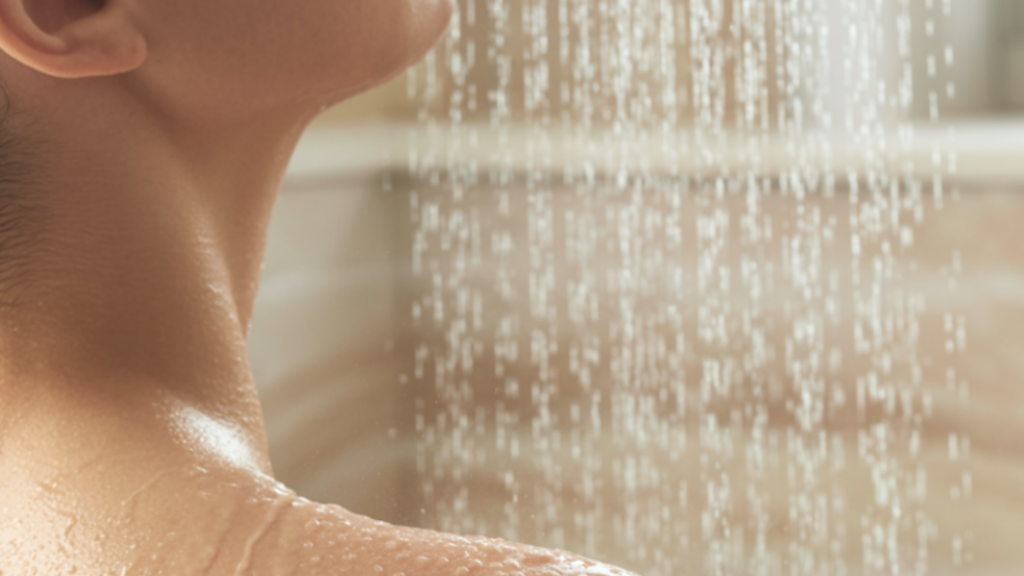
If the signs persist after that, the remaining variable is the water itself, and the only place to change it is at the point of use. Fitted at the shower rather than the mains, a vitamin C shower head treats the stream in the moment it passes through. Ascorbic acid reacts with the chlorine residual and helps neutralise it, converting it into far less reactive products before the water reaches your skin.
Two configurations cover most bathrooms. The Nourish handshower sits at S$99 and the Radiance at S$149, the latter adding the Aera Flow plate that raises perceived pressure while cutting water use. For a fixed overhead arrangement, the Aura is S$249. If you would rather keep the head you have, a universal retrofit filter at S$49.90 threads onto a standard hose instead.
Budget for refills before you buy. Each Vitae Infusion cartridge carries 25,000 mg of vitamin C and lasts two to three months in a normal household, at S$29.90 each or three for S$74.90. Skin usually reports back within a fortnight. Hair takes longer, because what water does to hair moisture shows up over growth cycles, not weekends.
Frequently asked questions
How much chlorine is in Singapore shower water?
The same as the tap water feeding it. PUB reported an average total chlorine of 2.27 mg/L for 2025, ranging 1.43 to 2.87, with monochloramine averaging 2.10 mg/L. Levels vary a little by location and time of day depending on distance from the treatment works.
Can I smell chlorine at levels that matter?
The nose is sensitive to chloramine at concentrations well below anything of regulatory concern, so smelling it is not evidence of a problem. It is evidence the residual is present and doing its job. Whether that matters to your skin is a separate question your skin answers, not your nose.
Is it the chlorine or the hard water?
Not hardness. PUB’s average total hardness is 42.7 mg/L, which classifies as soft, so most of the imported advice about limescale and mineral film does not apply here. Singapore sits firmly on the soft side of that line.
Does letting the water run first help?
Not meaningfully. Running the tap clears water that has been standing in the pipe, which can help with taste, but the residual is present throughout the supply by design. Nor does boiling deal with chloramine the way people assume, and it is impractical at shower volumes anyway.
Could shower water be causing hair fall?
Shedding has many causes and most of them are not the water. Dryness and rough texture are the plausible water-related complaints. The honest version of the hair loss question is worth reading before spending money on either side of it, and persistent shedding belongs with a doctor.
How soon would a SUHAE filter make a difference?
Most people notice the smell go first, on the first shower, because that change is immediate. Skin comfort tends to be a one to two week observation. Hair is slower still. The refill runs two to three months, so the first honest verdict arrives around the time you replace it. Warranty covers functional parts only, not labour or transport.
References
- PUB, Singapore Drinking Water Quality, January to December 2025. pub.gov.sg
- PUB, Water Treatment. pub.gov.sg
- PUB, Water Quality. pub.gov.sg
- Seki T et al. Free residual chlorine in bathing water reduces the water-holding capacity of the stratum corneum in atopic skin. J Dermatol, 2003. PMID 12692355. pubmed.ncbi.nlm.nih.gov
- American Academy of Dermatology, Dermatologists’ tips for relieving dry skin. aad.org
Run the free experiment first: cooler water, shorter showers, moisturiser on damp skin, three weeks. If the signs are still there afterwards, the vitamin C shower heads are the next thing worth looking at.
