
Shower Tips & Lifestyle
How to Improve Water Pressure in Your Shower
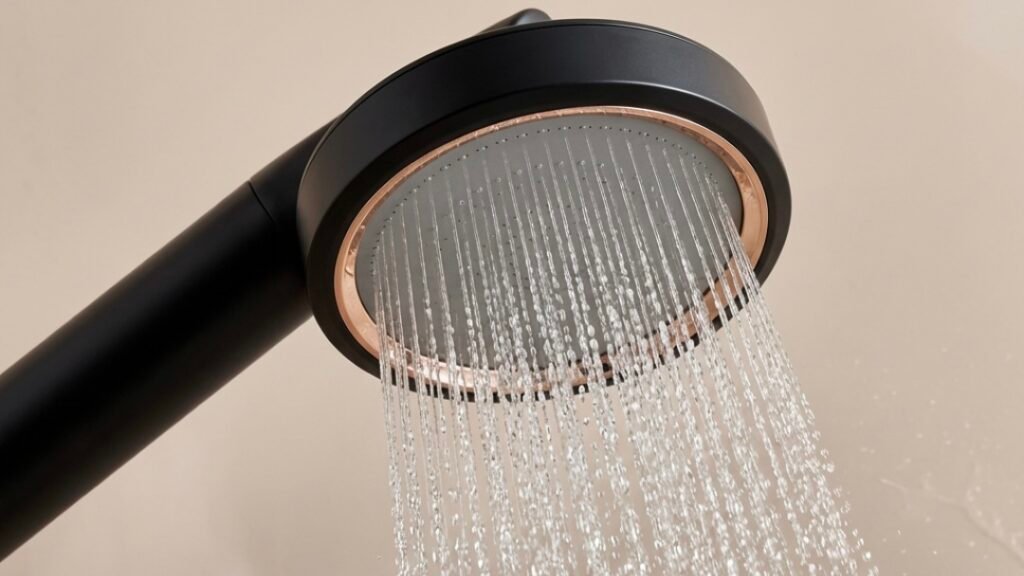
Jul
Quick answer: To improve shower water pressure, work through the cheap causes before the expensive ones: measure the flow so you have a baseline, descale the head, straighten or replace the hose, confirm the isolation valve is fully open, change a spent filter cartridge, and check the inlet screen on the water heater. Only after all six is the head itself worth replacing, and only after that is a booster pump worth pricing.
Most advice on this topic opens by telling you to buy something. That is the wrong end of the list. In flats and condos here the supply is usually fine, and the restriction sits somewhere in the last two metres of pipe, hose and hardware you can reach yourself.
This article does not argue whether you should want more pressure at all. That case is made separately in the piece on why a stronger stream is not automatically a better one. What follows assumes you have decided your shower is genuinely weak and want it working again.
Why a shower goes weak in the first place
Three separate things hide behind the word pressure, and telling them apart decides what you do next.
Static pressure is what the building delivers to your riser. Residents have essentially no control over it, and in Singapore’s high-rise stock it is rarely the culprit.
Flow rate is how many litres actually reach you each minute. Most faults live here, because every restriction between riser and head takes a slice out of it. A part-closed valve, a collapsed hose liner and a clogged cartridge all subtract from the same number.
Spray geometry is how the water is shaped on the way out. Two heads passing identical volumes feel completely different, because narrow angled openings send water out faster. This is what people mistake for pressure, and the only part a new head can change.
The practical consequence is an order of operations. Fix flow-rate restrictions first, because they are free or nearly free. Change geometry last, because that is the part you have to buy.
The objection: surely it is the building, not my bathroom
It is the first conclusion most people reach, usually followed by a search for booster pumps. Sometimes it is correct. Landed properties, very old blocks and top-floor units with a long vertical run can genuinely be short of supply.
There is a two-minute test that settles it. Run the basin tap at full, then the kitchen tap, then the shower. If the taps are strong and only the shower is weak, the supply is fine and the fault sits downstream of the wall. If every outlet is weak at the same time of day and neighbours report the same, the conversation belongs with building management or the town council rather than with a shower head.
A pump installed to compensate for a blocked cartridge is an expensive way to push water through a blockage. Rule out the cheap causes first.
Who should work through this, and who should not
Worth an evening if the shower has got worse over time rather than always being weak, if the drop followed renovation work, if the head is years old and has never been cleaned, or if rinsing long hair takes noticeably longer than it used to.
Skip it if the shower is fine and you are asking only because an advertisement suggested it should be stronger. Skip it too if the real complaint is skin that feels tight afterwards, since force is not the variable behind that one.
Call a licensed plumber if you find damp patches, staining on a ceiling below, or a water bill that has climbed without explanation. Those point at a leak, which is not a pressure project.
The order to work in
- Get a baseline. Hold a one-litre bottle under the running head and time the fill. Write it down, and repeat after each fix. Without a baseline you are judging every step on memory, and memory is generous.
- Descale the head. Unscrew it, soak it overnight in white vinegar, work a toothpick across the spray holes, then rinse it through from the back. Years of soap film narrow the holes unevenly, which is why an old head feels weak and badly aimed at once.
- Inspect the hose. Detach it at both ends and look through it. A kink, an over-long hose looped on the floor, or a liner that has collapsed with age all cost you flow. Hoses are cheap and the most commonly ignored part of the assembly.
- Check the isolation valve. Behind or beneath the mixer there is usually an angle valve. After renovation it is often left part-closed, throttling the shower while the rest of the flat runs normally. Open it fully and re-run the bottle test.
- Replace a spent cartridge. If you run a filter, the mechanical layer fills with sediment and the flow drops too gradually to notice. This is the most common cause of a filtered shower going weak, and the replacement interval to work to is set out separately.
- Look at the water heater. Instant heaters, common in HDB bathrooms, carry a small inlet screen that clogs. Anything needing the casing off is a job for the manufacturer technician.
- Check the diverter. On a bath-and-shower mixer, a worn diverter leaks part of the flow back to the spout. If you can hear water at the bath outlet while showering, that is your answer.
- Then change the head. If the bottle test says flow is healthy and the shower still feels flat, the water is being released rather than shaped. No amount of cleaning changes that.
Six of those eight cost nothing but an evening. Most weak showers here are solved between step two and step five.
If the head turns out to be the problem
Look at spray design rather than a bigger opening. The features worth checking before buying a head are worth reading first, since the specification that matters is not printed in large type.
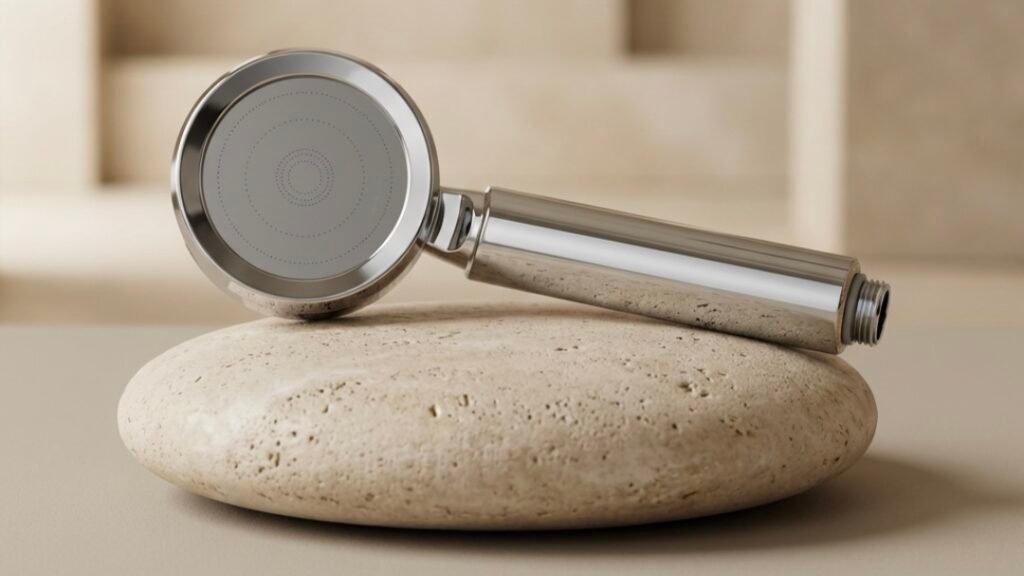
Engineered around triangular micro-jet spray holes, Aera Flow shapes the stream instead of simply releasing it, giving up to 50% stronger perceived pressure and 400,000 negative ions per cc while cutting water use by 30 to 50%. Nothing about the plumbing changes. The same volume arrives faster and across more of you.
Priced at S$99, the Nourish handshower is the entry point into that spray design, and the Radiance at S$149 adds Vitae Infusion with 25,000 mg of vitamin C to help neutralise chlorine, one refill included. Both sit in the vitamin C shower head range and use standard HDB and condo threading, so fitting takes two minutes with no tools. To keep the head you already like, the universal retrofit filter at S$49.90 threads in behind it.
Whether adding filtration to an already weak shower makes it worse is answered in the piece on filters and shower pressure.
What to expect afterwards
Week 1 to 2. A descale and a hose change show up on the bottle test immediately. A new head changes the feel on the first shower, and takes a few days to stop feeling merely unfamiliar.
Month 1 to 2. Shower length usually falls without anyone deciding to shorten it, simply because rinsing finishes sooner. On a household meter that is roughly when it shows.
Month 3 to 6. Put descaling on a schedule from here, whatever you own, because the decline is slow enough to go unnoticed until the shower feels weak again. If you run a cartridge, each Vitae refill lasts 2 to 3 months and the refills are stocked at S$29.90 each or three for S$74.90.
Frequently asked questions
Can I improve shower water pressure without a plumber?
In most cases yes. Descaling, hose replacement, opening a valve fully and changing a cartridge are resident-level jobs. Anything behind the wall or inside a heater casing is not.
Why did my shower pressure drop suddenly?
Sudden drops usually follow an event. Recent plumbing work points at a valve left part-closed. A drop with no event behind it points at a cartridge reaching the end of its life or debris dislodged into the line after a mains interruption.
Does a water-saving head make the shower weaker?
Not necessarily, and often the opposite. Narrowing and angling the openings raises the speed of the water leaving them, so a lower volume can register as a stronger spray.
Is a booster pump worth installing?
Only where the incoming supply is genuinely low, which the tap-by-tap test tells you. In an apartment it needs approval from building management, so confirm that before pricing anything.
Does limescale build up in Singapore?
Far less than in hard-water countries. PUB reported average total hardness of 42.7 mg/L for 2025, which is soft, as the breakdown of what PUB hardness figures actually mean sets out. Spray holes here clog mainly with soap film and fine sediment from ageing pipework, though the cleaning method is the same.
Will a SUHAE head fix low pressure caused by my building?
No, and it would be dishonest to suggest otherwise. Spray geometry raises how strong the water feels at a given supply. A short supply is a plumbing matter first. Warranty covers functional parts only.
References
- PUB, Singapore Drinking Water Quality, January to December 2025. Total hardness average 42.7 mg/L, chlorine average 2.27 mg/L. pub.gov.sg
- PUB, Water Treatment. pub.gov.sg
Run the bottle test tonight and work down the list. If the flow turns out to be healthy and the shower still feels flat, the spray is what needs replacing, and the vitamin C shower head range is where to compare the options.
