
Buying Guides
BTO Shower Head: What to Change First in a New Flat
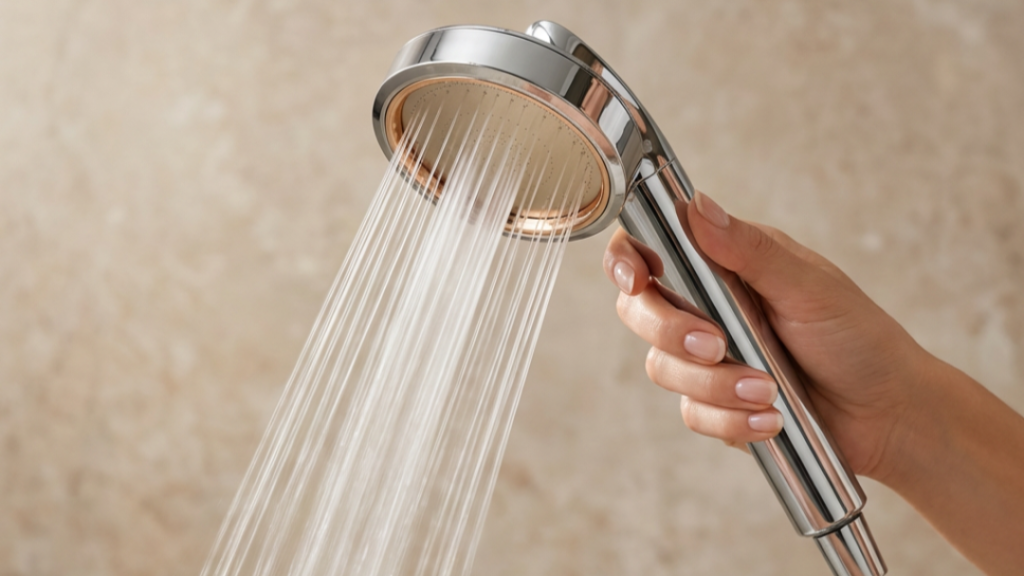
Aug
Quick answer: Choosing a BTO shower head is never urgent, because the flat is handed over with a working one already fitted. The parts worth changing early are the ones that thread on by hand: the head, the hose, and anything that filters. Tiling and pipework are a separate question, because HDB restricts finishes work in bathrooms for the first three years and PUB reserves regulated pipe work for licensed plumbers.
Most people collect keys, look at the bathroom, and decide it is fine. It usually is. What comes with a new flat is functional equipment specified to a builder’s budget, and the distance between functional and pleasant is where the small upgrades live.
Table of Contents
What a BTO bathroom actually gives you
HDB fits the bathroom out before handover, and one detail explains a lot of first-week disappointment. Its home care guide notes that water regulators are “provided in taps and shower systems at each bathroom tap to save water”, and that a regulator can be removed from the spout and cleaned with a brush and water when flow slows. Flow can also be adjusted at the water-meter adjustment valve in the service duct outside the flat.
That regulator is usually why a brand new flat feels weaker than the showroom did. It is not a fault. It is doing the job it was fitted to do.
Two rules shape everything after that. HDB states that “newly built flats have a 3-year restriction period in place for the removal of wall and floor finishes in bathrooms and toilets”, which puts re-tiling and moving the shower position out of reach until year four. PUB, separately, requires that “all regulated water service and sanitary plumbing works must be carried out by Licensed Plumbers (LPs), except for simple plumbing works that can be carried out by handymen”. Replacing taps and shower hoses sits on that simple-works list. Cutting into pipes does not.
Read together, the two rules point the same way. Any BTO shower head decision made in the first three years comes down to the ones that thread onto fittings already in the wall, and everything else can wait.
“The one that came with the flat works fine”
It does, and it is worth saying so before anything else. Water arriving at a new flat has been through the same treatment as water everywhere else on the island, and PUB publishes what is in it: chlorine averaging 2.27 mg/L, monochloramine averaging 2.10 mg/L, total hardness averaging 42.7 mg/L, and pH around 8.0. That water is safe to drink and tested against WHO guidelines, with PUB conducting over 500,000 tests a year under SAC-SINGLAS accredited methods. It is also soft by any normal classification, which means the limescale problem driving shower upgrades in Europe does not really transfer here. The line between the two is worked through in this explainer on hard water and soft water.
So the case for changing anything is narrower than “the water is bad”. A shower is roughly ten minutes of direct skin and hair contact, every day, in a climate where daily showering is not optional. Safe to drink and optimal for that kind of contact are two different standards. Ammonia is added during treatment to form chloramines, which PUB describes as “a more stable chlorine residual”, and stability is precisely what makes the residual still present at your shower head rather than gone by the time it reaches you.
Who should bother in year one, and who should not
A BTO shower head is worth changing for some households in the first year and worth leaving alone for others, and the difference is usually timing rather than taste.
Worth doing early:
- You are already swapping the head for spray or pressure reasons, so the labour is happening anyway
- Someone in the flat notices tightness or dryness after showering and wants to change one variable at a time
- You have long or colour-treated hair and rinse it daily
- Your renovation is finished and the water has run clear for a week
Leave it alone for now:
- You have not lived through a full month in the flat yet, so you have nothing to compare against
- Renovation is still running and there is dust in the line
- Your only complaint is weak flow, which is often the regulator or the stopcock rather than the head
- You are within a few months of a planned bathroom overhaul at year four
Worth keeping the evidence in proportion while you decide. Seki and colleagues (2003) found that chlorine at 1.0 to 2.0 mg/L reduced the water-holding capacity of the stratum corneum, though that finding sits with patients who already had atopic dermatitis rather than with the general population. Perkin and colleagues (2016), looking at domestic water hardness and atopic dermatitis risk in infancy, were explicit that chlorine’s influence remains uncertain. If someone in the flat is under a doctor’s care for their skin, that is the conversation to have first.
BTO shower head options you can fit without a licensed plumber
Four routes are open to you, and all four are hand-tight work.
1. The head itself: the BTO shower head change that costs least and is noticed first
Threaded onto the existing hose, a replacement handshower changes spray pattern and perceived pressure without touching a pipe. Spray-hole geometry does most of that work, and the features that actually matter in a head are narrower than most listings suggest. Built around triangular micro-jet spray holes, the Aera Flow design is rated by SUHAE at up to 50% stronger perceived pressure while using 30 to 50% less water, which is the same trade PUB’s labelling scheme rewards.
Best for: anyone whose first complaint after moving in is the spray.
Skip if: you have not yet cleaned the regulator, which is free.
2. A retrofit filter on the head you already own
Sitting between the hose and the head, a universal filter adds filtration without asking you to give up a fitting you chose. At S$49.90 the SUHAE universal retrofit is the lowest-commitment way to test whether filtered water changes anything for you, and the universal shower filter range fits standard HDB and condo threads. Filtration inside it runs through the Purea Core, a three-step cartridge built from SGS-tested materials with no detectable cadmium, lead, mercury or hexavalent chromium.
Best for: flats where the builder’s head is genuinely good, or where a rain set is already installed.
Skip if: you want one fitting rather than two joints in the line.
3. A vitamin C head, with dechlorination built into the fitting
Suitable for daily use where the chloramine residual is the specific concern, the Vitae Infusion cartridge carries 25,000 mg of vitamin C with glycerin, milk extract and aloe vera, and helps neutralise chlorine as water passes through. The chemistry here is the defensible part, and an honest look at what these heads do and do not do is worth reading before you buy. Priced at S$149 including one refill, the Radiance sits in the vitamin C shower head range, with the Nourish at S$99 below it.
Best for: one-fitting simplicity, and households happy to keep a consumable topped up.
Skip if: nobody in the flat will remember to change a cartridge.
4. An overhead rain set, the upgrade the three-year rule most often blocks
Wall-mounted rain sets frequently need a new outlet point, which means tiling, which means waiting. Where an existing overhead outlet is already there, a set can go in far more easily, and the comparison between rain and handheld in an HDB bathroom covers what changes in practice. Priced at S$249, the Aura overhead sits in the rain shower set range alongside the Wasserfall Radiance Set at S$1,399.
Best for: flats with an existing overhead point, or owners planning a year-four bathroom job.
Skip if: the install needs a wall opened before the restriction period ends.
What to expect after a BTO shower head swap
Week 1 to 2. Spray and pressure differences register immediately, because they are mechanical. Anything to do with how skin or hair feels is too early to judge, and a single week of humid weather will confound it anyway.
Month 1 to 2. This is the honest window. Hair rinsed daily has had enough cycles to show a difference or not, and you will know whether the cartridge routine fits your household. A first refill falls due around here: the signs a cartridge is spent are easier to read than a calendar, though two to three months is the normal interval.
Month 3 to 6. Running cost becomes the real question rather than the novelty. Refills run S$29.90 each or three for S$74.90, and the refill range is where the ongoing spend actually sits. If nothing has changed for you by month six, the honest answer is that it was not your variable.
Frequently asked questions
Does changing a BTO shower head void anything?
Replacing taps and shower hoses appears on PUB’s list of simple plumbing works that a handyman may carry out, so no licensed plumber is needed for a hand-tight swap. Keep the original fitting in a box in case you want it back.
Can I install a rain shower in my BTO within the first three years?
A BTO shower head or hose swap is fine at any time. A rain set is only fine if it does not require removing wall or floor finishes in the bathroom, which HDB restricts for three years in newly built flats. Where a new outlet point is needed, the work waits.
Why does my new flat have weaker flow than the showroom?
A water regulator is fitted at each bathroom tap and shower system by design. HDB’s own guidance covers removing it from the spout and cleaning it with a brush and water when flow drops over time. Height plays a part as well. In a written reply to a parliamentary question on water pressure, the Ministry of Sustainability and the Environment stated that PUB maintains water pressure that can adequately supply water directly to fittings not exceeding 25 metres above mean sea level, with taller buildings relying on their own pumping and storage.
What water efficiency rating should I look for?
Under PUB’s labelling scheme, shower taps and mixers rated three ticks use 5 litres per minute or less, and two ticks covers more than 5 up to 7 litres per minute. Only fittings at two ticks and above have been allowed for supply and installation since 01-04-2019.
Do filters reduce pressure?
Adding a stage in the line can change flow, though head design matters more than the filter itself. What actually happens to pressure when a filter goes in is worth understanding before assuming either way.
Does SUHAE fit HDB and BTO bathrooms without modification?
Built for the universal thread used in HDB and condo bathrooms, the SUHAE fittings are made in Korea from RoHS-compliant ABS and need no modification in a standard bathroom. For the less common connections, a Vitae-Connector covers the gap at S$69.90 to S$99. You can also see the fittings in person at T-Space, #01-18, 1 Tampines North Drive 1, Singapore 528559.
References
- PUB, Water Quality: over 500,000 tests a year, SAC-SINGLAS accredited
- HDB, Renovation Guidelines for Building Works: 3-year restriction on removing wall and floor finishes in bathrooms and toilets
- HDB, Home Care Guide: Bathroom Fittings and water regulators
- PUB, Plumbing Works: licensed plumbers and simple plumbing works
- PUB, Water Efficiency Rating and Requirements, 01-12-2021
- PUB, Singapore Drinking Water Quality, January to December 2025
- Ministry of Sustainability and the Environment, Written Reply to Parliamentary Question on Water pressure
- PUB, Water Treatment: chloramine as a stable chlorine residual
- Seki T, et al. Free residual chlorine in bathing water reduces the water-holding capacity of the stratum corneum in atopic skin. J Dermatol, 2003. PMID 12692355
- Perkin MR, et al. Association between domestic water hardness, chlorine, and atopic dermatitis risk in early life. J Allergy Clin Immunol, 2016. PMID 27241890
Keys collected and boxes still unpacked, the shower is rarely the first thing on the list, and it does not need to be. When you do get to it, start with the change that needs no plumber and no tiling: have a look through the vitamin C shower heads and pick the BTO shower head that fits the bathroom you actually have.
