
Shower Tips & Lifestyle
Changing a Shower Head in a Rented Apartment in Singapore
Sep
Quick answer. Changing a shower head in a rented apartment is allowed in Singapore without calling a plumber, because PUB lists replacing a shower hose or a showerhead among the simple plumbing works that do not need a licensed one. What decides it in practice is your tenancy agreement and the handover inventory, not the plumbing rules. Keep the original head, use nothing more than your hands, and screw it back on before the final inspection.
Most tenants get as far as reading the tenancy agreement, find no mention of shower heads anywhere in it, and decide to leave the whole thing alone. That caution is reasonable. It is also usually unnecessary, because a shower head is a screw fitting on the end of a flexible hose, which puts it closer to a light bulb than to anything structural.
What the rule actually says, and who wrote it
PUB draws a line between work that needs a licensed plumber and work that does not. Its Plumbing Works page puts, word for word, “Replacing or removing any of the following accessories connected to a tap: a shower hose or a showerhead” in the second group. Nothing is cut into, nothing is soldered, and no part of the building’s water service is opened. One fitting unscrews from the hose and the next one screws on.
That settles the regulatory question and leaves the one that actually matters in a rental: who owns the head on the wall. It belongs to the landlord, it was almost certainly written into the inventory at check-in, and it has to be there at check-out. Every route below is built around that constraint. The mechanics are the same in a rental as in a flat you own, and the three ways a shower filter can actually be fitted covers the physical steps.
“It is not my flat, so I should leave it alone”
Fair instinct, and it is the reason most rented bathrooms in Singapore still run whatever the developer supplied. It is pointed at the wrong risk, though. Landlords object to holes, leaks and missing items, and rarely to a tenant who improves something at their own cost and restores it before handing back the keys.
Three habits cover almost all of it. Photograph the original head and the hose joint before touching anything, so the check-in condition is on record with a date on it. Bag the original part somewhere you will still find it in eighteen months. Hand-tighten only, because the washer inside the hose nut does the sealing and a spanner adds nothing except the chance of cracking a thread. If the hose is old and shedding, the dark specks that collect inside an ageing shower hose are worth reading before deciding which part to change.
Who this is worth doing for
Daily showering in a warm, humid climate is what makes contact time worth thinking about at all. PUB’s January to December 2025 figures put free chlorine at an average of 2.27 mg/L and monochloramine at an average of 2.10 mg/L, the stable residual that keeps the supply protected all the way to your tap. Safe to drink is not the same thing as optimal for ten minutes of skin contact every day, and a two-year lease is roughly seven hundred showers in a bathroom you did not choose. Why that residual is chloramine rather than free chlorine is covered in the difference between the two disinfectants Singapore uses.
A few situations are worth checking before ordering anything. Where the shower is a fixed rain head plumbed into the ceiling with no hose joint, there is nothing to unscrew, and the honest answer is a conversation with the landlord rather than a purchase. Where the agreement carries an explicit clause about not altering fittings, written permission first is the cheap move. Where the stay is a three-month serviced lease, the payback window is short enough that the effort is hard to justify. And where the worry is white marks on the glass, PUB’s average total hardness of 42.7 mg/L classifies as soft water, so those marks are soap scum and the fix is a cloth rather than a filter.
Four routes, and what each one asks of your tenancy
1. Inline filter at the hose joint: nothing gets removed
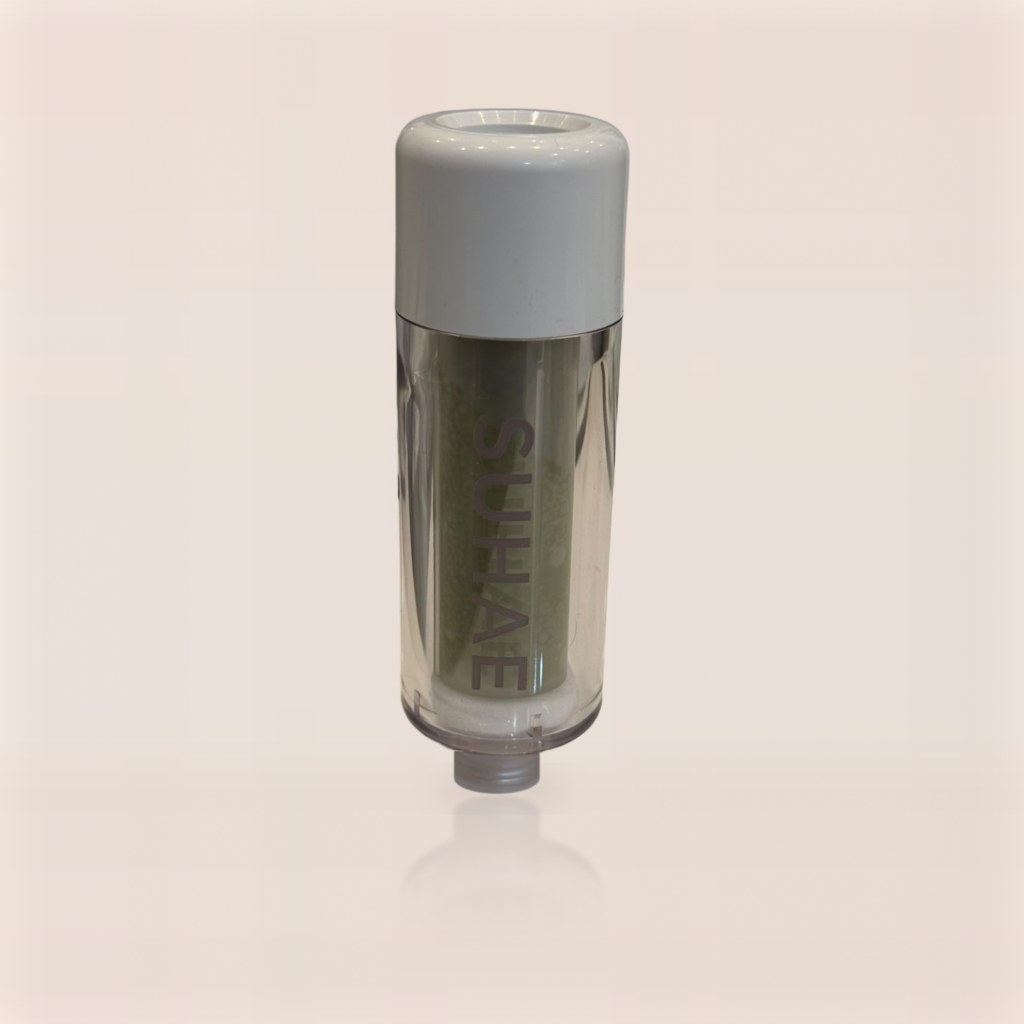
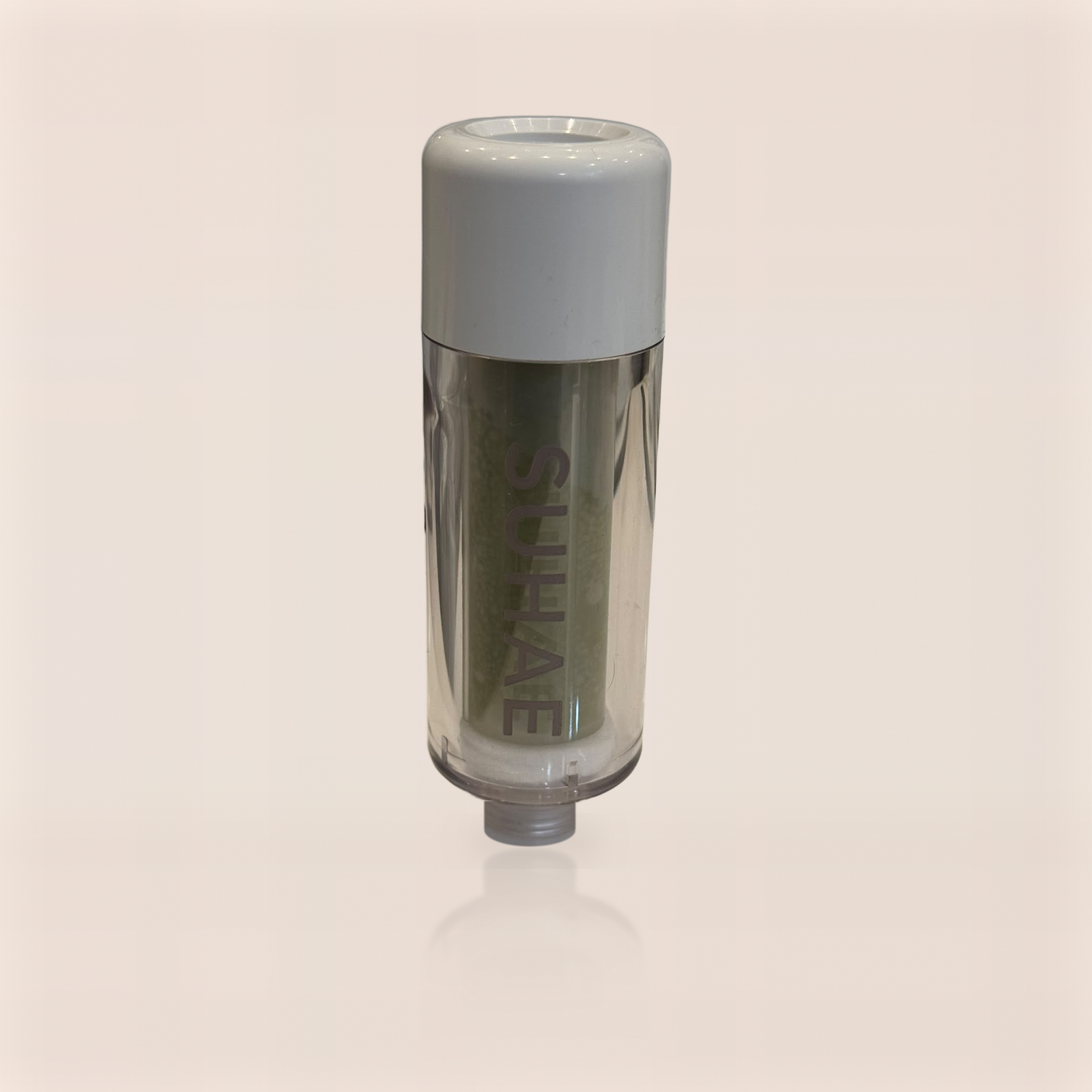
Rather than replacing anything, this route adds a short housing between the hose and the head that is already there. The landlord’s head stays exactly where the inventory says it is, which is the cleanest possible answer if anyone ever asks. Suitable for almost any rental with a flexible hose, the SUHAE Universal retrofit filter is S$49.90 and uses the standard thread found across HDB and condo bathrooms.
Best for: tenants who want the original hardware untouched and the whole thing undone in under a minute.
Check first: this route adds a second joint to the line, so both washers want to be seated properly before the water goes back on.
2. Swap the head, keep the original in a bag
Where the supplied head is clogged, uneven or simply unpleasant, swapping it solves spray and filtration in one part instead of stacking two. Designed for daily use on a standard hose, the SUHAE vitamin C handshowers start at S$99 for the Nourish and S$149 for the Radiance, which includes one Vitae refill. If you are weighing this against the retrofit, the comparison between a filtering head and an add-on filter sets out the trade-off properly.
Best for: leases of a year or more, and bathrooms where the original head has visibly had a long life.
Check first: the old head has to be kept rather than thrown out, and the storage plan needs to survive the whole tenancy.
3. Ask the landlord, then leave it behind
On a lease you expect to renew, there is a version of this where you say what you are fitting and offer to leave it behind when you move. Agents tend to read that as an upgrade to the unit rather than an alteration to it, and it removes the restoration step entirely. It also puts something in writing, which is the part that protects the deposit.
Best for: renewals, long stays, and landlords who already respond quickly to maintenance requests.
Check first: the offer only makes sense on hardware you are content to walk away from, which suits a S$49.90 retrofit better than a handshower you have grown attached to.
4. No hose joint at all: raise it with the landlord as maintenance
Some bathrooms have no joint to work with at all, usually a ceiling-mounted rain head on rigid pipework. The route that costs nothing is to raise it as a maintenance item rather than a preference, because a shower head that sprays unevenly or drips is the landlord’s to deal with. Where the unit is a rental you are slowly making liveable, what can be changed in an HDB bathroom without renovating is a useful map of where the line sits.
Best for: fixed rain heads, short leases, and agreements that are unusually strict about fittings.
Check first: this route depends on a cooperative landlord and comes with no timeline attached.
What to expect
- Week 1 to 2. The fitting takes about a minute. Run the shower at full flow and check the joint for drips over the first few days, since a washer slightly off seat shows up early rather than late.
- Month 1 to 2. A cartridge or refill runs 2 to 3 months on normal daily use, and how often a shower filter needs replacing in Singapore goes into what shortens that.
- Month 3 to 6. Keep the receipt. When the lease ends, the original head goes back on and the filter goes in the box with everything else headed to the next place.
Frequently asked questions
Is changing a shower head in a rented apartment allowed?
Yes as a matter of regulation. As a matter of the tenancy, it depends on what your agreement says about fittings and on whether the original is restored at handover. Asking costs one message and removes the argument, so most tenants ask.
Do I need a licensed plumber in Singapore?
PUB lists replacing or removing a shower hose or a showerhead among the simple plumbing works that do not require a licensed plumber. Anything that involves the pipework behind the wall is a different matter and does.
What if I damage the thread?
Hand tightening is what prevents it. The seal comes from the washer inside the nut, not from force, so the fitting only needs to be firm. If a thread is already worn when you unscrew the old head, photograph it and tell the landlord before fitting anything new.
Can I take the shower head with me when I move out?
Yes, as long as the original goes back on. The part you bought is yours and it fits the next bathroom, which is a large part of why renters buy this category at all.
Will it fit an HDB or condo rental?
Almost always, because Singapore bathrooms overwhelmingly use one standard hose thread. Instant heaters are the exception worth checking, and how filtration behaves on an instant water heater covers what to look at first. New flats follow the same fittings, which is why the shower head options a BTO owner can fit without a plumber read very similarly to this list.
Which SUHAE option is easiest to reverse?
Sitting between the hose and whatever head is already fitted, the Universal retrofit at S$49.90 is the one that removes without the landlord’s hardware ever leaving the wall. Where flow is the complaint as much as filtration, a handshower swap does more, and the way spray design changes water use explains why a smaller volume can still feel stronger.
References
- PUB, Plumbing Works: the simple plumbing works list, including replacing a shower hose or a showerhead.
- PUB, Singapore Drinking Water Quality, January to December 2025: free chlorine average 2.27 mg/L, monochloramine average 2.10 mg/L, total hardness average 42.7 mg/L, pH 8.0.
- PUB, Water Treatment: “Ammonia is added to the treated water to form chloramines, a more stable chlorine residual.”
- PUB, Water Quality: over 500,000 tests conducted annually, SAC-SINGLAS ISO/IEC 17025 accredited.
The reversible version of this is the one worth knowing about, because renting rarely rewards spending money on someone else’s bathroom. Fitted in a minute and removed in less, a retrofit filter is the one part of a shower you can take with you when the lease ends. The range is at the showroom at T-Space, #01-18, 1 Tampines North Drive 1, Singapore 528559, if you would rather hold one before deciding.
