
Buying Guides
Filtered Shower Head vs Shower Filter: 3 Options Compared
Sep
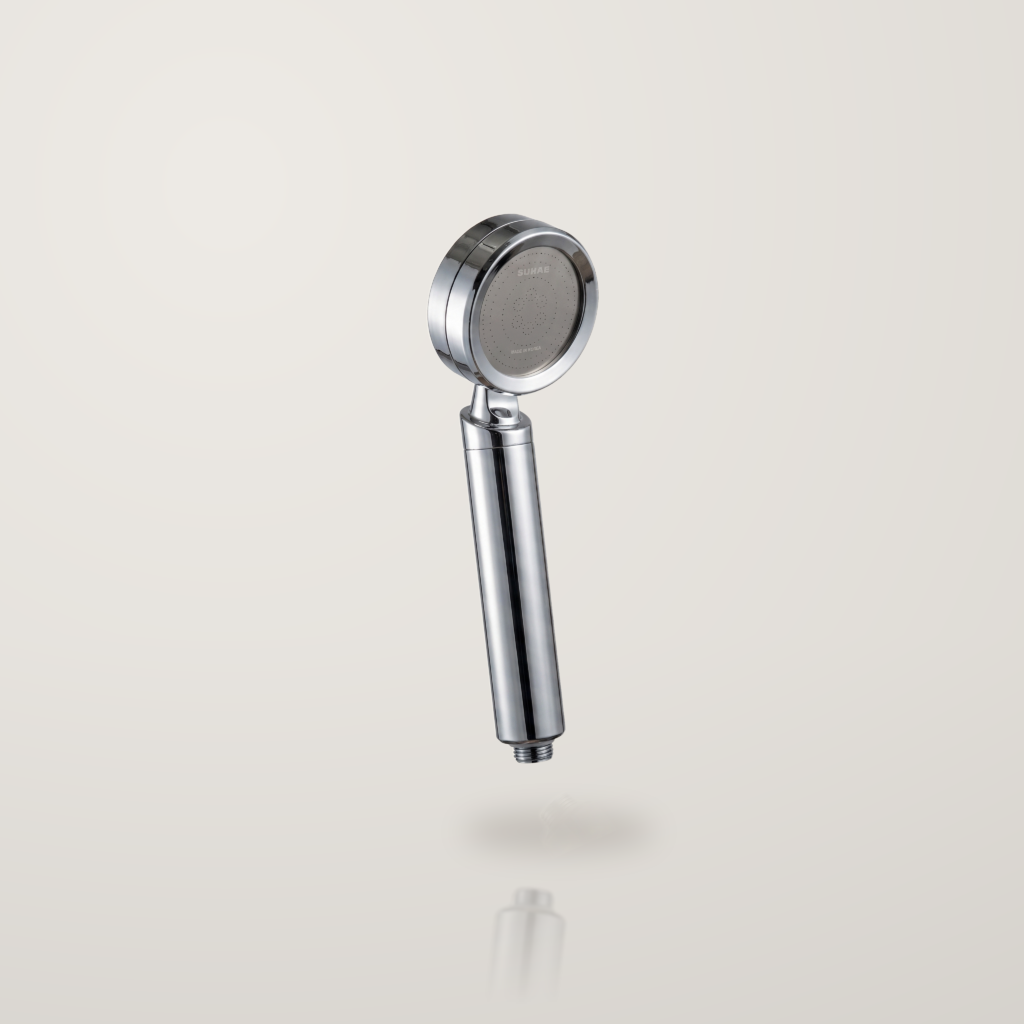
A filtered shower head has the cartridge built into the handset, so replacing the filter means holding a new head. A shower filter is a separate housing that screws in between the hose and the head you already own. The filtered shower head vs shower filter question is really a question about your existing hardware: keep the head, or replace it.
Most people land here after a run of moisturisers that did not hold, and after someone mentioned the water. The shopping is where it gets confusing, because two products that look nothing alike are sold against the same complaint. One is a shower head. The other is a short cylinder that sits behind whatever head is already on the wall, and until you know which part of the chain each one occupies, the price difference between them looks arbitrary.
What is in the water, and where a cartridge sits in the line
PUB treats Singapore’s supply and then keeps a disinfectant residual in it all the way to the tap. Its own description of the step is blunt: “Ammonia is added to the treated water to form chloramines, a more stable chlorine residual.” Stable is the operative word. Chloramine holds its form through the pipe run, which is exactly what public health requires and exactly why it is still present when the water reaches your skin.
The 2025 figures are published. Total chlorine averaged 2.27 mg/L across the year, with a range of 1.43 to 2.87. Monochloramine averaged 2.10 mg/L. Total hardness averaged 42.7 mg/L, which sits in the soft band, so the limescale advice that fills overseas buying guides does not transfer to a Singapore bathroom. Anyone weighing up whether local water is hard or soft before spending anything can stop there: it is soft, and softening is not the job.
None of that makes the water a problem to drink. PUB runs over 500,000 tests a year and reports the supply as meeting WHO guidelines. The narrower point is the one worth paying for: safe to drink is not the same as optimal for ten minutes of daily skin contact. Both formats in this comparison address the same residual, using the same chemistry. What separates them is position in the line.
If both filter, why would the format matter
It is a fair objection, and the honest answer is that the cartridge is not the only variable. Format decides three things you will live with long after the chemistry stops being interesting.
First, spray. A head with filtration built in also controls the plate, the hole pattern and the flow path, so it can be designed around the cartridge sitting inside it. A retrofit filter cannot change the spray at all, because the spray is decided downstream by whatever head is already there. If the reason you are shopping is partly that the shower feels weak, a filter alone will not fix it, and the separate question of what a filter does to flow in a Singapore flat is worth reading before you assume either way.
Second, what you throw away. Built-in cartridges are usually a sealed refill that drops into the handset. Retrofit housings take their own cartridge format. Neither is inherently cheaper per month, but they are not interchangeable, so the format you buy is the refill you are committed to for as long as you own it.
Third, installation. Both are hand-tight fittings on a standard hose thread. Neither needs a licensed plumber: PUB’s own plumbing works guidance lists “Replacing or removing any of the following accessories connected to a tap: a shower hose or a showerhead” among the simple works a handyman may carry out. The three routes a filter can take into an HDB bathroom covers the mechanics if your setup is unusual.
Who this comparison is for, and who should skip it
Worth your time if you shower daily in a warm climate, have a head you either like or actively dislike, and want to change one thing rather than renovate. Renters and anyone inside the HDB three-year restriction on toilet finishes are in the best position of all here, because both formats are reversible in under ten minutes.
Not worth your time in three cases. If you are looking for treatment of a diagnosed skin condition, this is the wrong aisle, and the research is narrower than the marketing suggests. Seki and colleagues reported in 2003 that chlorinated water at 1.0 to 2.0 mg/L reduced stratum corneum hydration in patients with atopic dermatitis, which is a finding about patients with atopic dermatitis and not a finding about everyone else. If limescale on the glass is the complaint, the hardness figure above already answers it. And if the goal is drinking water, a shower fitting of any kind is the wrong device for the job.
Filtered shower head vs shower filter, side by side
1. Filtered shower head: one handset, cartridge inside
Everything arrives as a single unit. The cartridge seats inside the handset, the plate is designed around it, and there is nothing extra hanging between the hose and your hand. Priced for a straight swap rather than an upgrade project, the Nourish sits at S$99 and the Radiance at S$149 with one Vitae refill included, and the wider range of vitamin C handshowers differs mostly in plate design rather than in what the cartridge does. Vitae refills carry 25,000 mg of vitamin C with glycerin, milk extract and aloe vera, and help neutralise chlorine in the water passing through.
- Best for: anyone replacing the head anyway, anyone unhappy with the current spray, and new flats where nothing has been chosen yet.
- Skip if: the existing head was expensive, is part of a matched set, or belongs to a landlord who would rather it stayed on the wall.
2. Inline shower filter: a retrofit that keeps your head
The housing screws onto the hose thread and the head goes back on the other end. Nothing else about the shower changes. Built as a retrofit for showers people are otherwise happy with, the Universal filter is S$49.90 and fits standard HDB and condo threads, and the universal filter range includes cartridge variants so the consumable can be chosen separately from the hardware. For an overhead arm or an unusual thread, a Vitae-Connector bridges the gap at S$69.90 to S$99.
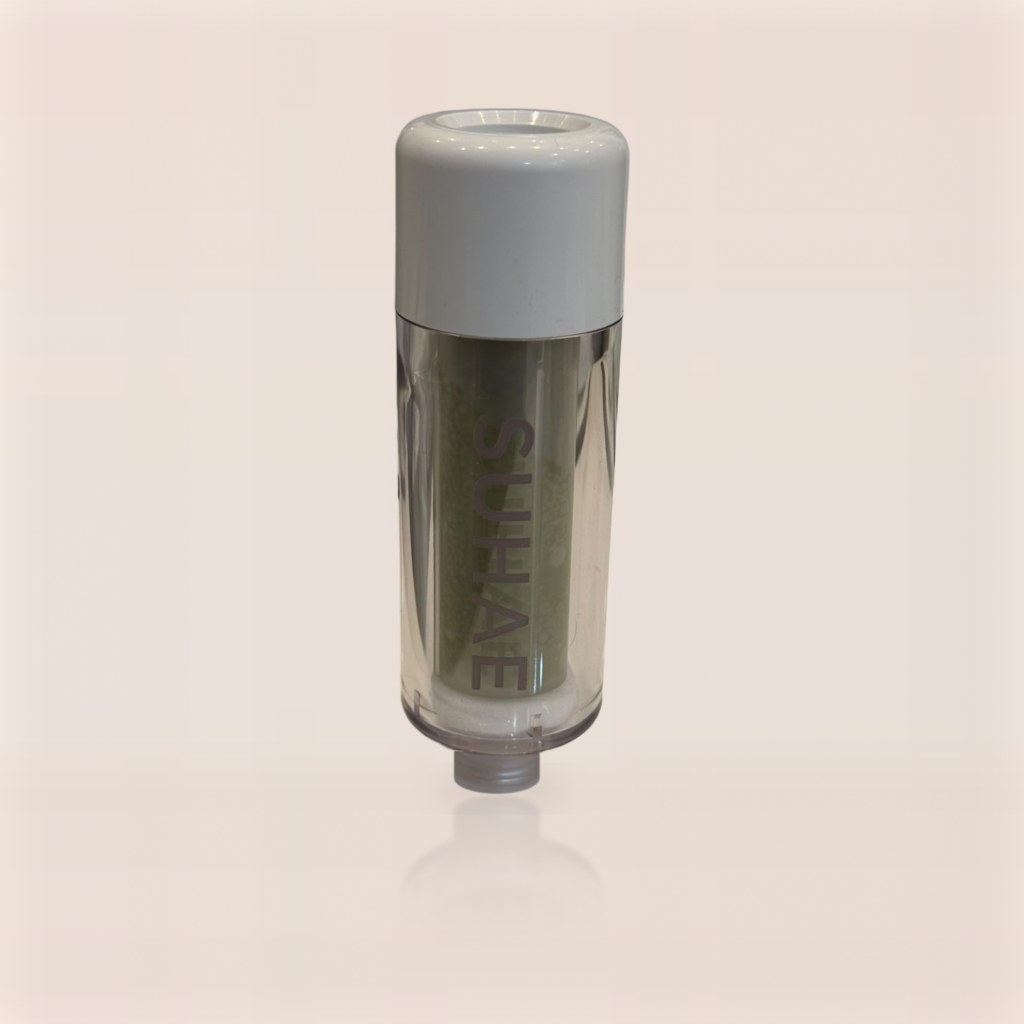
- Best for: a head you already like, a rental you would rather not modify, and the lowest entry price of the three.
- Skip if: the spray is the actual complaint, or the hose sits so close to the wall that an extra 10 cm of housing becomes awkward.
3. Filtered overhead panel: for bathrooms built around a rain head
Some bathrooms were designed around a fixed overhead and a handshower is the afterthought. Suited to that layout rather than sold as an upgrade to it, the Aura overhead runs S$249. The trade-off between the two formats is covered properly in the comparison of rain and handheld formats in an HDB flat, and the short version is that overheads are a plumbing decision while handshowers are a shopping decision.
- Best for: bathrooms where the overhead is already the main shower and the handset is secondary.
- Skip if: you rent, or the overhead is plumbed into the wall rather than fed from a hose.
Across all three, the consumable is the real running cost. Vitae refills are S$29.90 each or three for S$74.90. Working out how often a cartridge actually needs changing here matters more to the five-year cost than the difference between a S$49.90 housing and a S$149 head.
What to expect after you fit one
Week 1 to 2. The change most people notice first is smell at the head rather than anything on skin. Chloramine has a particular sharpness to it, and a drop in it registers quickly. If a strong smell was the original complaint, the separate piece on why shower water sometimes smells strongly of chlorine explains what is behind it. Skin and hair have not had time to show anything yet.
Month 1 to 2. This is where a cartridge starts to discolour and where the refill cadence becomes real rather than theoretical. Two to three months is the working life of a Vitae refill under daily use. Expect to be ordering the second one around now, which is also when people decide whether the format they picked is convenient enough to keep.
Month 3 to 6. Long enough to judge honestly. By this point the question is no longer whether you notice a difference, but whether it is worth the running cost to you. Some people conclude it was not. That is a legitimate answer, and it is a cheaper one to reach with a S$49.90 housing than with a full set.
Frequently asked questions
Does a shower filter make the water pressure weaker?
Adding a housing adds a restriction, so flow through it is never faster than flow without it. Whether you perceive that depends far more on the head than on the filter, which is why a head with the cartridge inside can compensate through plate design and a retrofit cannot.
Do I need a plumber for either one?
No. PUB lists replacing a shower hose or a showerhead as simple plumbing works that do not require a licensed plumber. Both formats are hand-tight on a standard thread, and both come off again the same way.
Can I use a filter and a filtered head together?
Physically yes, practically no. You would be paying for two consumables to treat the same water once, and stacking two restrictions in series for no additional benefit. Pick the position in the line that suits your hardware and buy one cartridge.
Does any of this remove chlorine completely?
It removes 99.9% of chlorine. Vitamin C in the cartridge neutralises it as the water flows through, before it touches your skin. If you are comparing filters, start with what a shower filter genuinely takes out of the water.
Chlorine or chloramine, which one am I dealing with?
Mostly chloramine, because that is what PUB maintains as the residual. The difference is not academic, and the breakdown of what Singapore tap water actually contains sets out which figure applies to which.
Which SUHAE format should I start with?
If the head on the wall is one you would not miss, start with a filtered handset, and the question of whether vitamin C shower heads do what they claim is answered separately and at length. If the head is fine, start with the Universal at S$49.90 and put the difference towards refill cartridges. Every SUHAE unit is made in Korea and the warranty covers functional parts.
References
- PUB, Singapore Drinking Water Quality, January to December 2025. Full report (PDF)
- PUB, Water Treatment. How chloramine is formed
- PUB, Water Quality. Testing programme and WHO guidelines
- PUB, Plumbing Works. Simple plumbing works a handyman may carry out
- Seki T, et al. Effects of chlorinated water on the skin. J Dermatol, 2003. PMID 12692355
The filtered shower head vs shower filter choice comes down to one thing: the cheaper mistake is the one you can undo. A retrofit housing goes on and comes off in a few minutes and tells you within a month whether filtered water is something you notice. If the head is due for replacement regardless, the maths runs the other way, and buying filtration built in saves you a fitting and a second cartridge format. Both are on display at the showroom at T-Space, #01-18, 1 Tampines North Drive 1, Singapore 528559, and a look at the spray plates settles the question faster than a spec sheet does.
