
Buying Guides
Water Purifier vs Shower Filter: Which One Your Home Actually Needs
Sep
A water purifier treats the small volume you drink and cook with, almost always at one kitchen tap. A shower filter treats the much larger volume that runs over skin and hair for ten minutes a day. The water purifier vs shower filter question is not really a contest, because the two devices sit on different pipes and answer different complaints, and in most Singapore homes one does not stand in for the other.
Plenty of people arrive at this question having already bought the kitchen unit. The water tastes cleaner, the kettle stops collecting a film, and the dry patches on the shins carry on exactly as before. That is not a fault in the purifier. It was plumbed into the sink, and nothing it does ever reaches the bathroom.
Water purifier vs shower filter: two different jobs
A drinking water purifier is a point-of-use device. It sits under or beside one sink and everything it does happens to the two or three litres a person actually swallows in a day. The priorities there are taste, odour, sediment and, on some units, chilled or hot water on demand. Judged on that job, a good one is worth having.
The bathroom is a different calculation entirely. PUB groups showering with flushing, kitchen use and laundry as the largest water-consuming activities in the home, together accounting for about 80% of total household water use. Almost none of that water is swallowed. It lands on skin and scalp instead, warm, at close range, every single day.
What is in that water is not a mystery. Singapore’s treated supply carries a disinfectant residual by design, and PUB states plainly that “Ammonia is added to the treated water to form chloramines, a more stable chlorine residual.” Stable is the word that matters. Monochloramine averaged 2.10 mg/L across 2025, in a range of 1.29 to 2.70, and stability is exactly what keeps the supply protected across kilometres of pipe. It is also the reason a measurable residual is still there when the water leaves the shower head. The difference between free chlorine and chloramine is worth understanding before you compare any two filters, because the two behave differently once the water is warm.
Singapore tap water is already safe, so why filter it at all
PUB conducts over 500,000 tests annually and the supply meets WHO guidelines. Nothing on this page disputes that, and the case for filtering a shower has to stand on its own without borrowing a scare it has not earned.
The gap is narrower and more specific than that. Drinking water standards describe what happens when water is swallowed. They were never written to describe what happens when warm water carrying a disinfectant residual runs across skin for ten minutes, daily, for years. Safe to drink and optimal for prolonged skin contact are two separate questions, and only the first one has a published standard behind it.
The evidence on the second question is real but narrow, and it is worth stating at its actual size. Seki and colleagues, writing in the Journal of Dermatology in 2003, found that chlorine at 1.0 to 2.0 mg/L reduced stratum corneum hydration in patients with atopic dermatitis. That was a study in patients, not a finding about the general population, and it should not be stretched into one.
One thing the overseas marketing gets wrong about this market is hardness. Singapore’s average total hardness sits at 42.7 mg/L, which classifies as soft, so the limescale argument that drives filter sales in Europe and North America does not transfer. If a softener is what you were actually considering, the case for a softener in a soft-water country is thin, and that is a separate comparison worth reading before you spend.
Who each device is for
Both devices are easier to judge once the household is described honestly, and the water purifier vs shower filter decision usually resolves itself the moment you name the complaint you are actually trying to solve.
- A purifier earns its place if the household drinks unboiled tap water in volume, dislikes the taste, or wants chilled and hot water at the sink without a kettle.
- A shower filter earns its place if skin or scalp reacts after showering, if hair is coloured or chemically treated, or if people in the flat shower twice a day, which in this climate most do.
- Neither is the right buy if the real complaint is weak pressure or a musty smell from one outlet only. Those are hardware and cleaning problems, and a cartridge will not touch them.
Worth saying clearly: a household that drinks bottled or boiled water and has no skin complaint at all needs neither device, and there is no version of this article that concludes otherwise.
How Singapore homes actually cover both
1. Kitchen purifier only: where most households start
This is the default, and it is usually the first water spend a flat makes. It handles drinking and cooking properly and it changes nothing about the bathroom. Households who came to this page because of skin or hair are, almost by definition, the ones who have already found the ceiling on this option.
- Best for: homes whose complaint is taste, odour or convenience at the sink.
- Skip if: the complaint that brought you here is on skin, scalp or coloured hair, because no kitchen unit reaches the shower riser.
2. Shower filtration only: the bathroom-first route
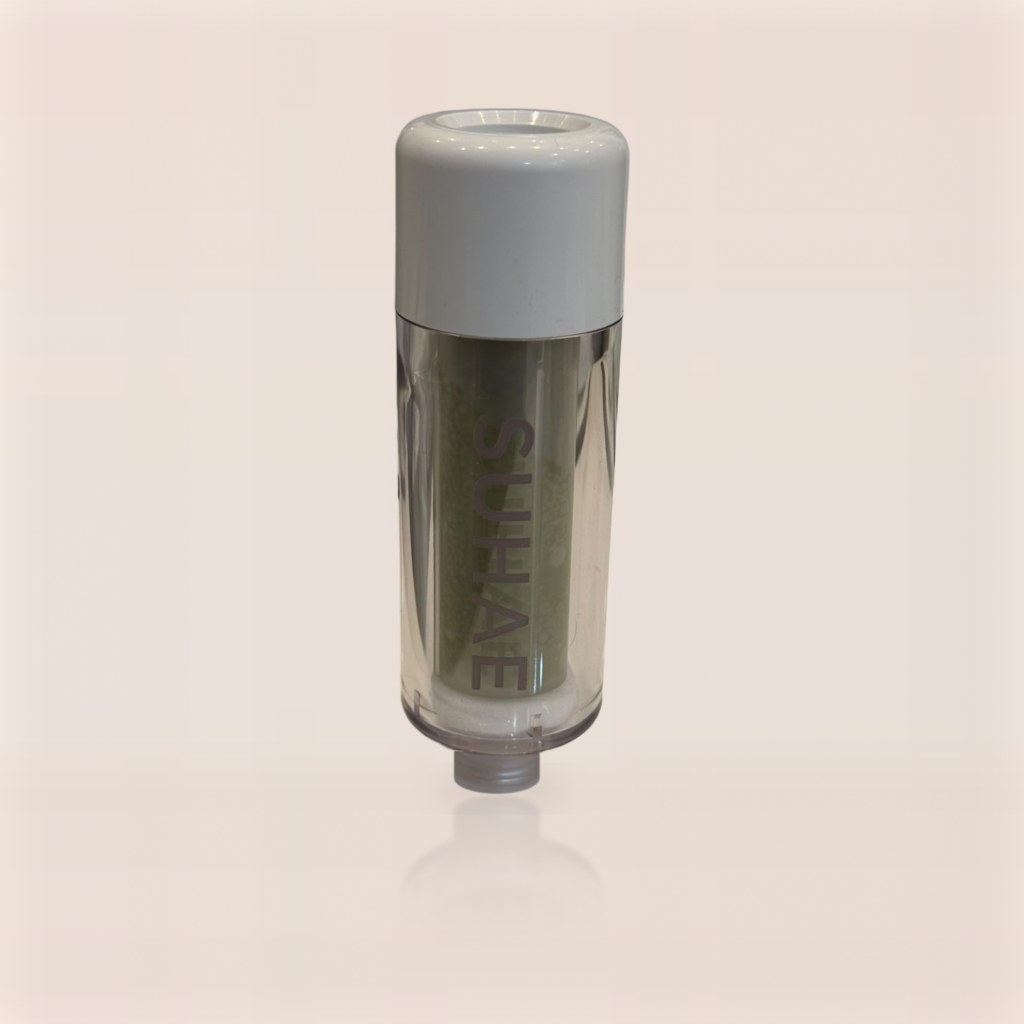
Treating the water at the point where it meets skin is the cheaper half of the pair, which surprises people who assume the bathroom device is the luxury one. Built as a retrofit for a shower you are otherwise happy with, the Universal filter is S$49.90 and screws in between the hose and the head already on the wall. Nothing else about the shower changes. If you would rather replace the head outright, the Radiance handshower is S$149 and includes one Vitae refill, and the split between those two routes is covered properly in the filtered head versus inline filter comparison.
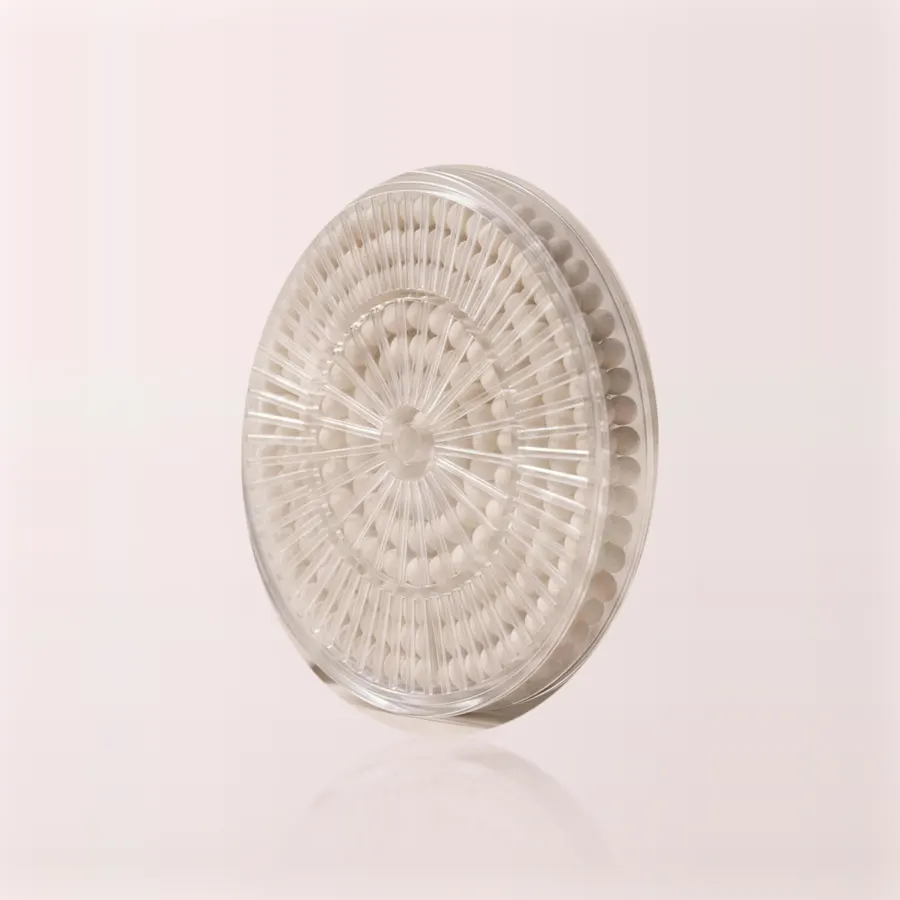
Whichever housing it sits in, the cartridge is doing the same work. Loaded into either one, a Vitae refill carries 25,000 mg of vitamin C with glycerin, milk extract and aloe vera, and helps neutralise chlorine in the water passing through. The full range of universal shower filters differs in fitting and finish rather than in what the cartridge contains, and a closer look at what a shower filter actually removes is the honest way to set expectations before buying.
- Best for: reactive skin, coloured or treated hair, rented flats where the kitchen plumbing is off limits, and anyone testing the idea for under S$60.
- Skip if: drinking water is the actual concern, since a shower filter is not built for consumption and makes no claim to be.
3. Both, sized to the job each one does
Running both is the arrangement that makes sense once the two jobs are separated, and it is less expensive than it sounds, because the two devices are not competing for the same budget line. A kitchen purifier is a multi-year fixture. A shower cartridge is a consumable: Vitae refills are S$29.90 each or three for S$74.90, and each one runs 2 to 3 months depending on how many people use the shower. Guidance on when a cartridge is actually due for changing is more useful than the number on the box.
- Best for: households with both a taste complaint and a skin complaint, and new flats fitting out both rooms at once.
- Skip if: only one of the two complaints is real, in which case buy that one device and leave the other until it earns its place.
What to expect after fitting a shower filter
Week 1 to 2. Smell is the easiest thing to compare, because the sharp note that comes off hot water is either there or it is not. Whether you notice a change in how skin feels after towelling off varies a great deal between households, and it is a subjective reading rather than a measured one.
Month 1 to 2. This is where the cartridge reaches the end of its stated life in a two-person flat. Discolouration in the housing is the plainest signal to change it, ahead of any date written on a calendar.
Month 3 to 6. Coloured hair is the slowest thing to judge and the most informative, because the gap between salon visits is long enough to set one cycle against the last. Anyone expecting the filter to resolve a dermatological condition is looking to the wrong device, and a doctor is the right call there.
Frequently asked questions
Can a kitchen water purifier supply the shower?
Not in a normal HDB or condo layout. Point-of-use purifiers are plumbed into one cold feed at one sink, and the shower runs off a separate riser through a heater. Whole-home filtration exists as a category, but it is a different installation, a different price bracket, and it is not what a countertop or under-sink purifier does.
Does boiling water do the same job?
For drinking, boiling addresses some things and not others, and it is covered in more detail in the piece on whether boiling removes chlorine. For showering it is beside the point, since nobody boils forty litres before standing under it.
Is Singapore’s water hard enough to need a softener?
PUB’s published average total hardness is 42.7 mg/L, which falls in the soft band. A softener is designed for a problem this supply does not generally present, which is why the comparison most Singapore households actually need is filtration against nothing, rather than filtration against softening.
Do I need a plumber to fit a shower filter?
An inline housing joins two threads that already unscrew by hand, so it is generally a job you can do yourself in a few minutes. The step-by-step for HDB and condo fittings covers the three common thread situations and what to do if the hose is seized.
How long does a shower cartridge last?
Two to three months is the working range, and the spread comes almost entirely from how many people use the shower and for how long. A single occupant will sit at the top of that range and a family of four at the bottom.
Which SUHAE option makes sense if the kitchen purifier is already in?
Start at the cheaper end, because the kitchen spend is already made. Suitable for a shower head you have no complaint about, the Universal retrofit at S$49.90 tests the idea without touching the hardware. If the head itself is due for replacement anyway, the vitamin C handshower range covers the same filtration with a new spray plate, and everything made by SUHAE is built in Korea to fit standard HDB and condo threads.
References
- PUB, Drinking Water Quality, January to December 2025. https://www.pub.gov.sg/-/media/PUB/PDF/SG-Drinking-Water-Quality.pdf
- PUB, Water Treatment. https://www.pub.gov.sg/Public/WaterLoop/Water-Treatment
- PUB, Water Quality. https://www.pub.gov.sg/Public/WaterLoop/Water-Quality
- PUB, Water Conservation. https://www.pub.gov.sg/public/waterloop/water-conservation
- Seki T, et al. Free residual chlorine in bathing water reduces the water-holding capacity of the stratum corneum in atopic skin. J Dermatol. 2003. PMID 12692355. https://pubmed.ncbi.nlm.nih.gov/12692355/
If the kitchen side of the house is already sorted and the bathroom is the part still bothering you, the retrofit is the low-commitment way in. It costs less than a month of moisturiser and comes off in the same two minutes it goes on, which makes it about the cheapest way to find out whether the water was ever part of the problem.
