
Shower Tips & Lifestyle
Simple Ways to Create a Spa-Like Shower Experience at Home
May
Quick answer: A spa like shower at home comes down to three things you can actually change: what the water is carrying, how the spray meets your skin, and what the room does to your senses while you stand in it. None of that requires a renovation or a contractor. A filtered shower head, a spray pattern matched to your flat’s water pressure, and five unhurried minutes will get you most of the way there.
Most people start with a candle and a new body wash. That works for about a week. Then the novelty wears off and the shower goes back to being four rushed minutes before work, which is where it started. The changes that hold are the mechanical ones, and in a Singapore flat they cost less than the scented candles do over a year.
Why a hotel shower feels different from yours
Three variables do almost all the work, and only one of them is decor.
The first is flow character. Perceived pressure has less to do with litres per minute than with droplet size and how evenly the stream lands. A wide overhead spreads the same flow across your shoulders and back at once, which the body reads as enveloping. A concentrated handshower puts the same water through a smaller area, which reads as forceful. Neither is better in the abstract. Getting the mismatch right for your own bathroom is a bigger factor than raw pressure numbers suggest.
The second is what the water is carrying. Singapore’s supply is treated and monitored to a standard most countries would envy, and PUB publishes the figures. In its Jan to Dec 2025 drinking water quality report, free chlorine averaged 2.27 mg/L and monochloramine averaged 2.10 mg/L. That residual is deliberate. PUB’s own description of the process is plain: “Ammonia is added to the treated water to form chloramines, a more stable chlorine residual.” Stable is the operative word. It is designed to survive the trip through the distribution network and still be present at your tap, which is exactly why it is present in your shower.
The third is the room. Steam that lingers, light that is warm rather than white, and one scent instead of four competing ones. This is the part everyone starts with and the part that matters least.
The part where you are right to be sceptical
Plenty of writing on this subject leans on skin claims that the evidence does not carry, so here is the honest version.
The study most often quoted is Seki and colleagues, published in the Journal of Dermatology in 2003. It found that chlorine at 1.0 and 2.0 mg/L significantly reduced stratum corneum hydration. Worth reading. Also worth reading carefully: the participants were patients with atopic dermatitis, a clinical population with an already compromised skin barrier. Extending that result to everybody would be dishonest, and we are not going to do it.
What survives the scepticism is narrower and still useful. A disinfectant residual is present in shower water by design. Contact happens daily, and in this climate often twice daily. Safe to drink and optimal for ten minutes of skin contact are two different questions, and PUB only answers the first one. Whether the second matters to you depends on your skin, which is the next section.
Who this is for, and who should skip it
Worth doing if you shower once or twice a day, if your skin feels tight in the ten minutes after towelling off, if you have colour treated hair that fades faster than the salon predicted, or if you are renting and cannot touch the plumbing.
Skip it, or at least delay it, in three cases. If your real complaint is weak flow, the cause is more often the pipework, the heater setting or a clogged aerator than the head itself, and there are cheaper checks to run before you buy anything. If you are renovating within six months, specify the shower then rather than buying twice. And if you are hoping to treat a skin condition, see a doctor. A shower head is a comfort upgrade, not a treatment.
What a spa like shower at home actually needs
In order of how much difference each change makes.
1. Fix the spray first
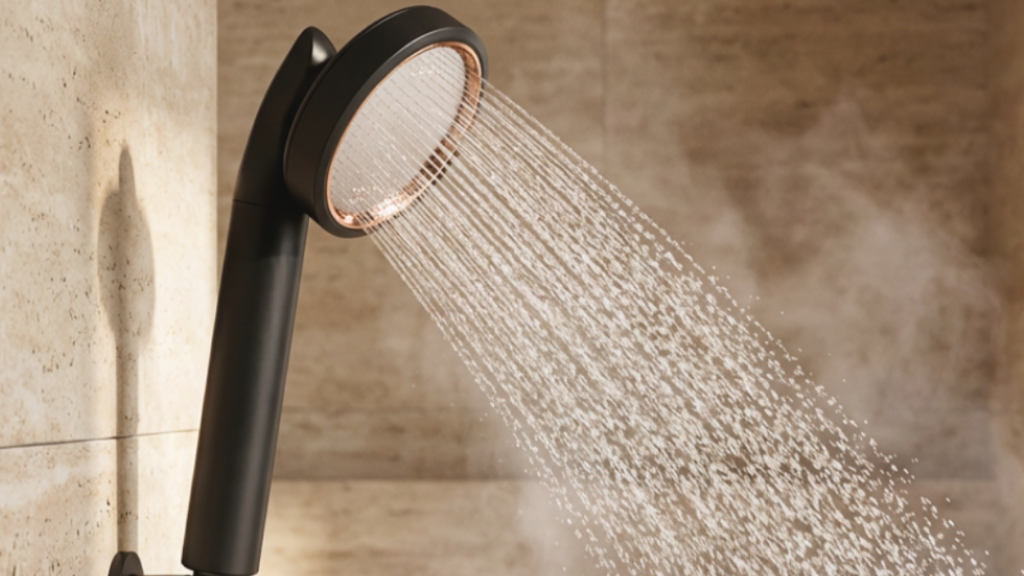
Larger, wider coverage is what most people are chasing when they say spa. Built for that overhead feel without a full bathroom rebuild, the rain shower sets spread flow across a much wider area than a handheld, and the Aura overhead at S$249 sits at the accessible end of that category. Designed around micro-jet triangular spray holes, Aera Flow raises perceived pressure by up to 50 percent while cutting water use by 30 to 50 percent, which matters when the same head runs twice a day. If you are still deciding between formats, the features worth checking before you buy anything are short and specific.
2. Then deal with what the water carries
Filtration at the shower head is point of use, which means it only runs when you do. Two mechanisms are worth knowing. Vitae Infusion holds 25,000 mg of vitamin C that reacts with the chlorine residual as water passes through, helping neutralise it rather than removing everything in the stream. Sitting behind it, the Purea Core handles three-step particulate filtration using SGS-tested materials.
Attached to hardware you already like, the Universal retrofit filter at S$49.90 is the cheapest route in, and the Vitae-Connector at S$69.90 to S$99 does the same job behind an existing rainshower arm. Cartridges are consumables. Each Vitae refill runs 2 to 3 months at S$29.90, or 3 for S$74.90.
3. Fix the room, cheaply
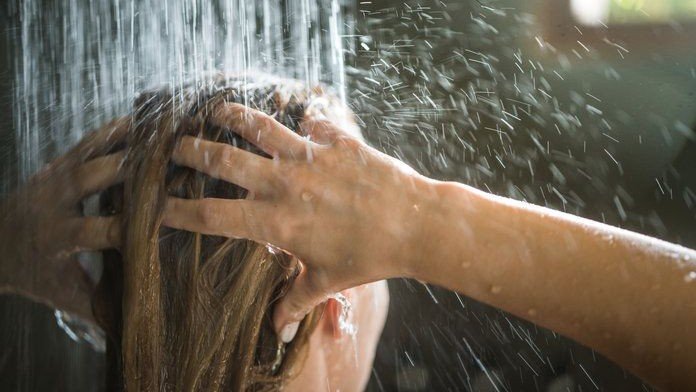
Turn the extractor fan off for the first two minutes so steam builds, then on. Swap the ceiling bulb for a warm 2700K one. Pick one scent and drop the other three; competing fragrances cancel each other out. Keep a folded towel warm on the rail rather than in the cupboard. Total cost, under S$40, and it does more for the sense of a shower being a reset rather than a chore than any single purchase.
4. Change the shape of the time
Ten minutes, phone left outside the door. Rinse in water cooler than feels natural for the last thirty seconds. Apply moisturiser while skin is still damp, not after. That last one is free and probably outperforms half the hardware in this article.
What to expect, honestly
Week 1 to 2. The spray change is immediate and obvious. The chlorine smell in the cubicle drops, which most people notice before anything else. Skin feedback at this stage is unreliable, because you are paying attention in a way you were not before.
Month 1 to 2. If there was going to be a difference in how tight skin feels after drying, this is where it shows. Hair takes longer, since you are only judging the new growth and the length you have kept.
Month 3 to 6. By now the routine is the routine, and the honest test is what happens when you shower somewhere else. That is usually when people notice what they had changed.
Frequently asked questions
Do I need a plumber to change a shower head in an HDB flat?
For a handshower, no. It threads onto the standard hose fitting used in HDB and condo bathrooms and takes a few minutes with plumber’s tape. A wall mounted overhead set is a different job and usually does want a hand.
Will a filter reduce my water pressure?
Any cartridge adds some resistance. Whether you feel it depends on the spray design downstream of it, and a head engineered for the filter usually compensates. The trade-off between filtration and flow is worth understanding before you commit.
Does a hotter shower change the chlorine exposure?
Warmer water increases volatilisation, so more of the residual leaves the water and enters the air in the cubicle. Ventilation matters as much as filtration here, which is why the extractor fan is not optional.
Is Singapore tap water hard?
No. PUB’s 2025 figures put total hardness at an average of 42.7 mg/L, which classifies as soft. Anyone selling you a softener for a Singapore flat is solving a problem you probably do not have.
How much should I budget in total?
A retrofit filter plus the room changes lands around S$90. A full handshower and cartridge routine sits nearer S$150 for the first year. An overhead set is the S$249 tier and up.
What does SUHAE actually cover under warranty?
Functional parts only. Cartridges are consumables and are not covered, since they are designed to be used up. If you are unsure which model suits your bathroom, the showroom at T-Space, #01-18, 1 Tampines North Drive 1, Singapore 528559 has them running on live water.
References
- PUB, Singapore Drinking Water Quality, January to December 2025. Chlorine average 2.27 mg/L, monochloramine average 2.10 mg/L, total hardness average 42.7 mg/L, pH 8.0.
- PUB, Water Treatment. On the use of ammonia to form a more stable chloramine residual.
- Seki T et al., Journal of Dermatology, 2003 (PMID 12692355). Chlorine at 1.0 and 2.0 mg/L and stratum corneum hydration in atopic dermatitis patients.
If the spray is the thing you want to change first, spend ten minutes comparing coverage patterns across the overhead sets before you look at anything else. Everything in this article stacks on top of that decision, and it is the one that is hardest to undo later.
