
Hair Care
Why Colored Hair in Singapore Needs Better Shower Water (And How to Protect It Daily)
May
Quick answer: A colour treated hair shower filter does one specific job. It reduces the chlorine residual in the water before that water meets hair whose cuticle is already more porous than it was pre-salon. In Singapore that residual averaged 2.27 mg/L across 2025 and it meets you every time you wash, which in this climate is often daily. A filter will not stop fade on its own, and nobody should sell it to you as if it will.
Most people work through the obvious levers before they get here. Colour-safe shampoo, cold rinses, a bond builder, a purple mask for brass. All sensible, all worth doing. Water is the one input in the routine that nobody chose and nobody examines, and in Singapore it is also the input you use most.
Why colour fades faster than the salon predicted
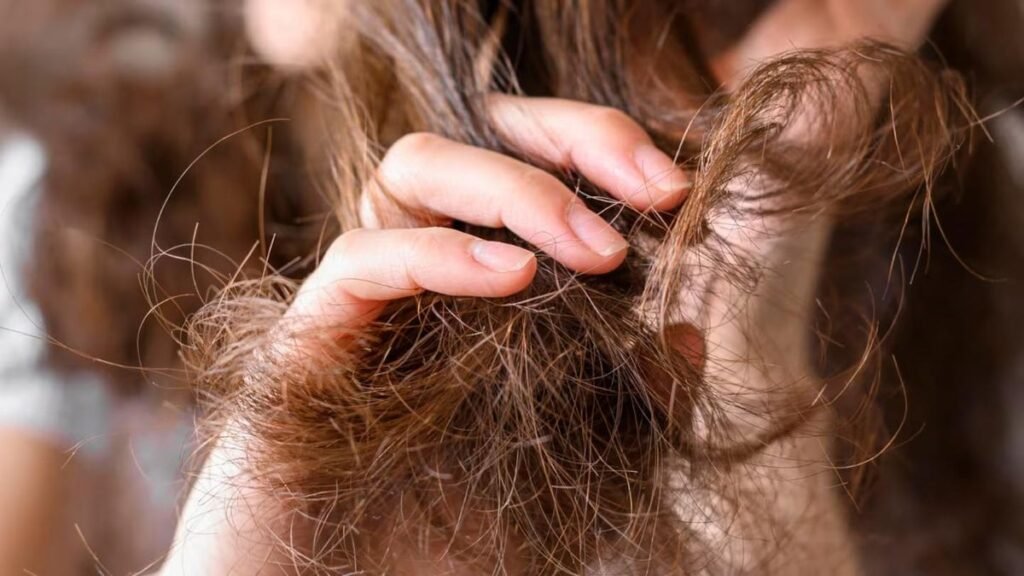
Colouring works by swelling the hair and lifting the cuticle so pigment can be deposited inside the cortex. The cuticle closes afterwards, but not to its original tightness. What you leave the salon with is hair that is slightly more porous, slightly more permeable, and slightly quicker to lose and gain water than it was that morning. Every subsequent wash acts on that altered structure, which is how water quality interacts with hair structure in the first place.
Now add the water. PUB disinfects the supply and then, in its own words, ammonia is added to the treated water to form chloramines, a more stable chlorine residual. Stability is the entire design goal. It keeps the water protected from the treatment works to a bathroom on the eighteenth floor, and it means the residual is still there when you turn the tap.
Chlorine is an oxidising agent. That is what makes it useful as a disinfectant and it is also why it does not leave dyed pigment entirely alone. Published figures for January to December 2025 put average total chlorine at 2.27 mg/L, ranging 1.43 to 2.87, with monochloramine at 2.10 mg/L. Nowhere near pool concentrations. The difference is that nobody swims for ten minutes every single day, and here plenty of people shower twice.
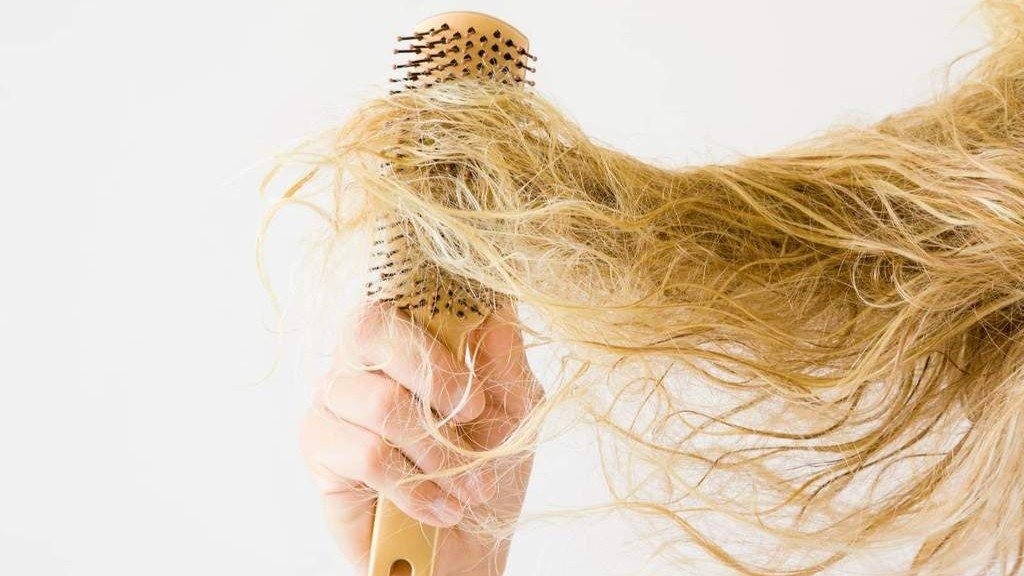
Heat compounds it. Warm water lifts the cuticle further and increases how much the strand interacts with everything dissolved in the stream, which is why temperature changes your chlorine exposure more than most people expect. Frequency, temperature and porosity stack. Concentration is the least interesting variable in that list.
What the evidence supports, and what it does not
Here is the part the category usually skips. There is no controlled trial demonstrating that a domestic shower filter preserves salon colour for a measurable number of extra washes. If a brand quotes you a figure for that, ask where it came from. The chemistry is sound and the mechanism is reasonable, but a mechanism is not a measured outcome, and the two should not be dressed up as the same thing.
The nearest well-cited human work looks at skin rather than hair. Seki and colleagues, in the Journal of Dermatology in 2003, found that chlorinated bathing water at 1.0 and 2.0 mg/L significantly reduced stratum corneum hydration in patients with atopic dermatitis. That is a specific population and a specific tissue. It suggests residual chlorine at ordinary domestic levels is not inert on contact, and it stops there.
So the honest position is a modest one. Reducing chlorine removes one oxidative stress from a strand that is already carrying several, alongside UV, heat styling, and the colour process itself. It is not a treatment and it does not repair anything. What it changes is the daily condition of the water, which is worth something precisely because it is daily.
Who this is for, and who should not bother
Skip it if your hair is uncoloured and behaving. Skip it too if your colour is a permanent shade close to your natural base, because those fade slowly and rarely generate complaints. And skip it if you have not yet tried the free changes, since a filter bought before a cooler rinse is money spent in the wrong order.
It earns consideration if you hold a fashion shade, an ash tone, a pastel or a lightened blonde, all of which are the first to drift. Also if you wash daily or twice daily through the heat, if you are stretching an expensive salon appointment as far as it will go, or if your hair feels rough at the mid-lengths regardless of what conditioner you use. The pattern of how local water affects hair moisture is usually recognisable once someone points at it.
One thing it is not for. Shedding. If you are losing more hair than usual, that has many possible causes and a filter addresses none of them. The shower water and hair loss question deserves a careful answer, and persistent shedding belongs with a doctor rather than a shopping list.
The routine that costs nothing
Wash less often than the humidity tempts you to. Rinse cool, or at least finish cool, because the last thirty seconds sets how the cuticle lies. Wait forty-eight hours after colouring before the first wash. Use a sulphate-free formula, keep conditioner on the mid-lengths and ends rather than the scalp, and cover your hair on long afternoons outdoors, since UV does at least as much to a fashion shade as anything in the pipe.
Give that four weeks before adding equipment. If colour still drops faster than the calendar says it should, and the pool smell is one of the signs you have already noticed in the cubicle, then the water is the remaining variable.
Choosing a colour treated hair shower filter
Filtration has to happen at the shower, because contact time is a second or less and there is nowhere else to intervene. Designed around that constraint, a vitamin C shower head uses ascorbic acid to react with the chlorine residual as water passes through, which helps neutralise it in the moment rather than adsorbing it slowly the way a carbon cartridge does. Reaction speed is the reason the approach suits shower flow rates at all.
The Nourish handshower sits at S$99. The Radiance is S$149 and adds the Aera Flow spray plate, which raises perceived pressure while using less water, useful if you rinse long hair and have watched the meter. For a fixed overhead, the Aura is S$249. If you like your current head, a universal retrofit filter at S$49.90 threads onto a standard hose instead and fits ordinary HDB and condo fittings.

Price the consumable before you commit, because that is the number that recurs. Each Vitae Infusion refill holds 25,000 mg of vitamin C and lasts two to three months in a normal household, at S$29.90 each or three for S$74.90. Replacement timing is worth planning rather than discovering.
Frequently asked questions
Does chlorine in tap water strip hair colour?
Chlorine is an oxidising agent and dyed pigment is oxidisable, so the interaction is real in principle. At Singapore’s domestic levels the effect per wash is small. What makes it worth discussing is repetition, not intensity, and repetition is the defining feature of showering in this climate.
Is this the same as the green tint blondes get from pools?
No. The green cast associated with swimming is generally attributed to copper compounds in pool water binding to lightened hair, not to chlorine itself. Domestic supply is a different situation entirely, and the complaint here is dullness and drift rather than a colour cast.
Would a water softener help my colour instead?
Unlikely, because Singapore does not have a hardness problem to solve. PUB’s average total hardness is 42.7 mg/L, which classifies as soft. The published numbers put the supply firmly on the soft side, so softener advice written for the UK or the US does not transfer.
How does vitamin C deal with chlorine?
Ascorbic acid reacts with chlorine and converts it into far less reactive products at the point of contact. It is a chemical reaction rather than a physical trap, which is what makes it workable in the fraction of a second water spends inside a shower head. The mechanism is worth understanding before comparing filter types.
Will vitamin C in the water damage my colour?
Concentrated ascorbic acid is used in salons as a colour remover, which is where this worry comes from. The quantity dissolving into a shower stream is very small by comparison and is being consumed by reaction with chlorine as it goes. If you have a sensitive pastel and want certainty, ask your colourist, who knows your formula.
What should I realistically expect from a SUHAE filter?
The chlorine smell usually goes on the first shower. Hair feel is a two to four week observation, and colour is slower still because you are comparing against a fade curve rather than a moment. No promise is being made about extra weeks of colour, since that has not been measured. Warranty covers functional parts only, not labour or transport.
References
- PUB, Singapore Drinking Water Quality, January to December 2025. pub.gov.sg
- PUB, Water Treatment. pub.gov.sg
- PUB, Water Quality. pub.gov.sg
- Seki T et al. Free residual chlorine in bathing water reduces the water-holding capacity of the stratum corneum in atopic skin. J Dermatol, 2003. PMID 12692355. pubmed.ncbi.nlm.nih.gov
Try the cool rinse and the longer gap between washes first, because they are free and they work. If your colour is still drifting after a month of that, the vitamin C shower heads are the one variable left to change.
