
Skin Care
Aircon Dry Skin Singapore: Why It Happens and What Helps
Oct
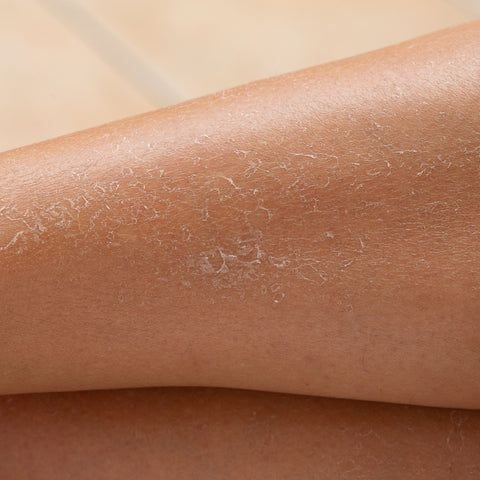
Aircon dry skin in Singapore happens because cooling air wrings the moisture out of it: the coil condenses water out of the room and sends it down the drain pipe, so indoor air is drier than the air outside. Skin loses water to that drier air, and most people sit in it for most of the day. What helps most is a cooler and shorter shower, moisturiser applied while the skin is still damp, and fewer things stripping the barrier.
Most people reach for a thicker moisturiser first. It holds an hour or two, then the tightness returns by mid-afternoon, usually on the shins and forearms. The odd part is that this happens in a country where the outdoor air is heavy enough to fog a camera lens the moment you step out of the lift.
Why air conditioning dries the air, and then the skin
Cooling is only half of what a compressor air conditioner does. It pulls air across a coil cold enough to take it below its dew point, moisture condenses on the metal, and that water leaves through the drain pipe running down the side of the block. The puddle under a condenser is humidity that used to be in the bedroom.
Skin sits on the boundary of that exchange. Water moves steadily from the lower layers out through the surface, a process called transepidermal water loss, and the drier the air above it, the faster it goes. The stratum corneum is both the layer that holds water and the layer that flakes when it cannot. A workday in an office at 23 degrees, then a night under a bedroom unit, and the skin spends most of its time giving water up to air that will take it. None of that is unique to Singapore. What is specific here is duration: air conditioning in a tropical city is not a seasonal appliance, so a mild daily effect becomes a cumulative one.
The obvious objection: Singapore is humid, so how is anything dry?
Outdoor humidity and indoor humidity are two different numbers, and skin only responds to the one it is standing in. The air outside a Tampines flat at 2pm and the air inside that flat with the unit running are not the same air. The gap between them is what the compressor was bought to create.
Moving between the two is its own small stress. Sweat evaporates fast on walking into a cold mall, taking water with it, and doing that four or five times a day leaves the barrier no settled stretch in which to recover.
Where shower water comes into it, and where it does not
This part is easy to overstate. Singapore’s tap water is safe to drink: PUB tests it against WHO guidelines and publishes the results every year. It is also soft, averaging 42.7 mg/L total hardness, so the hard-water explanation recycled from British and American skincare articles was written for a different country. There is a fuller account of what the local water does and does not do to skin.
What is present, deliberately, is a disinfectant residual. PUB’s 2025 figures put free chlorine at an average of 2.27 mg/L and monochloramine at 2.10 mg/L. In PUB’s own words, ammonia is added to the treated water to form chloramines, a more stable chlorine residual. That is why the water is still clean at an eighteenth-floor bathroom. The two behave differently on contact, compared in chloramine against free chlorine.
Safe to drink is not the same thing as optimal for ten minutes of daily skin contact. The evidence is narrow: a 2003 Japanese study found chlorine at 1.0 to 2.0 mg/L reduced stratum-corneum hydration in patients with atopic dermatitis. That was one specific group, and stretching it to cover everybody would be dishonest. For most people the bigger shower variable is heat rather than chemistry, which is why the temperature you run the shower at is the first thing to look at, and whether chlorine irritates skin the second.
Check first: whether this is the right explanation for you
- Skin that feels tight within minutes of towelling off, month after month, on the shins and forearms, is the pattern described here.
- A rash that is spreading, weeping or painful belongs with a doctor rather than a shower upgrade. Persistent or worsening skin is a medical question and hardware will not answer it.
- Dryness confined to the hands usually tracks soap and sanitiser frequency rather than the air in the room.
What to change, in order of effort
1. Shower temperature and length: the free change that does the most
Warm rather than hot, five to ten minutes, once a day. Hot water strips the lipids that hold moisture in the stratum corneum, and a cold flat makes a hotter shower feel necessary when it is only warmer by contrast.
- Best for: anyone who has quietly nudged the mixer further round over the past year.
- Check first: a shower already running lukewarm leaves little room here, so move to the next item.
2. Moisturiser timing: the two-minute habit
Applied to skin still damp, a moisturiser traps the water already on the surface instead of trying to add any. Pat dry rather than rub, then apply before leaving the bathroom. Same product, different timing.
- Best for: anyone who dresses first and moisturises later, or forgets when rushing.
- Check first: a routine already applying within two minutes of towelling off has most of this benefit.
3. Room settings: a degree or two warmer overnight
A unit set to 25 degrees rather than 22 runs less and condenses less water out of the room, and fan mode for part of the night does the same. The bedroom holds the longest unbroken exposure of the day, so adjust that one first.
- Best for: households running the bedroom unit all night at a low setting.
- Check first: sleep quality matters more than skin, so anyone who sleeps badly at 25 degrees should leave this one alone.
4. Shower water: the last variable rather than the first
With temperature, timing and room settings sorted and the skin still tight, the remaining daily variable is what the water carries. Designed to help neutralise the chlorine residual as it passes through, a vitamin C filter changes the contact rather than the supply. Built into the head on the Radiance and the Nourish, or added to an existing fitting through the universal retrofit filters, the cartridge chemistry is the same either way, and Vitae refills run two to three months each.
- Best for: daily showerers who have made the free changes already.
- Check first: buy one for the filtration and the spray, which are measurable. A filter will not offset a shower that still runs hot for twenty minutes, so the order of operations matters.
What to expect
Week 1 to 2. Temperature and timing show first: less tightness in the half hour after a shower, and usually less late-afternoon itch on the shins. Fastest feedback in the list, which is the reason to start there.
Month 1 to 2. Flaking settles as the barrier gets consecutive days without being stripped, and moisturiser lasts through the afternoon. Hair often changes in the same window, for the reasons set out in why hair feels dry after showering.
Month 3 to 6. The steady state, where the routine is habit rather than effort. What to watch by then is maintenance, since a cartridge left in past its life stops working quietly: how often to replace a shower filter.
Aircon dry skin: frequently asked questions
Does sleeping without air conditioning fix dry skin?
It removes the longest single stretch of dry-air exposure in the day, though the office and the commute still account for most waking hours. Raising the set temperature is usually more sustainable than switching the unit off in a Singapore bedroom.
Will a humidifier help in an air-conditioned room?
It puts moisture back into air the compressor is actively removing, so the two work against each other and the unit runs harder. Raising the thermostat gets a similar result without adding water to a closed tropical bedroom.
Is Singapore tap water hard enough to dry out skin?
No. PUB’s published average for total hardness is 42.7 mg/L, which classifies as soft water. Advice built around limescale is written for a very different supply and does not transfer here.
Why do my shins flake more than anywhere else?
Shins carry fewer oil glands, so less natural lipid is holding water in, and they take direct shower spray and direct aircon draught. First place dryness shows, last place it clears.
Does hot water make shower chlorine worse?
Heat drives more of the residual into the air as vapour and opens the skin to whatever touches it, so temperature and chemistry compound rather than act separately. The mechanics are set out in hot water and chlorine exposure.
Which SUHAE option suits an air-conditioned flat best?
Suited to a bathroom where the fitting stays put, the Universal retrofit at S$49.90 adds filtration to the existing hose. Where the head is being replaced anyway, filtration is built into the Radiance at S$149 and the Nourish at S$99, both taking the same Vitae refill. Comparing them on the vitamin C shower head range is the quickest way to tell which fits the bathroom.
References
- PUB, Singapore Drinking Water Quality, January to December 2025. pub.gov.sg
- PUB, Water Treatment. “Ammonia is added to the treated water to form chloramines, a more stable chlorine residual.” pub.gov.sg
- Seki T and others, Free residual chlorine in bathing water reduces the water-holding capacity of the stratum corneum in atopic skin. Journal of Dermatology, 2003. PMID 12692355. pubmed.ncbi.nlm.nih.gov
Work down that list in order and the free changes do most of the work inside a fortnight. If the shower is the variable you want to close off after that, the showroom at T-Space, #01-18, 1 Tampines North Drive 1, Singapore 528559 runs the handshowers on mains pressure, which beats reading about a spray.
