
Skin Care
Does Singapore Tap Water Affect Your Skin? Understanding the Real Impact on Hydration
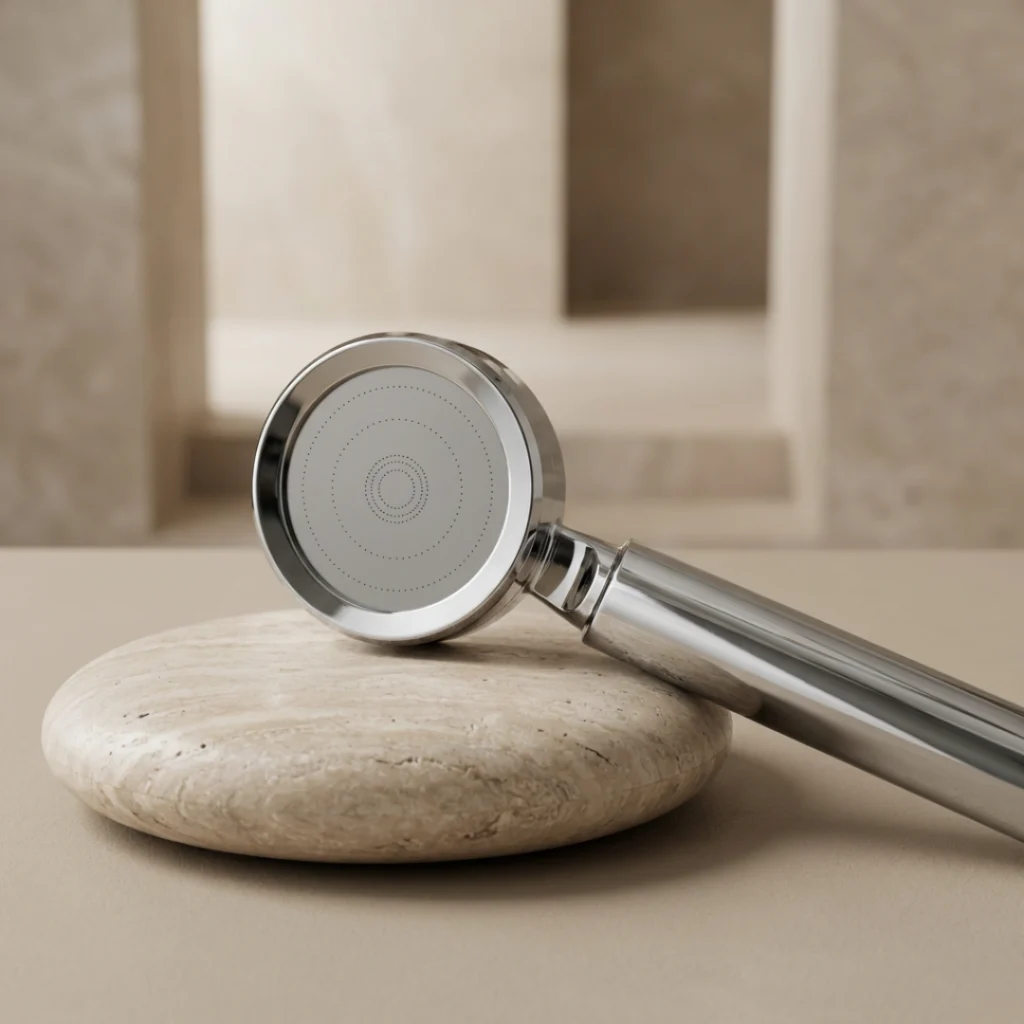
Apr
Quick answer: Singapore tap water is safe to drink and meets WHO guideline values, so it is not damaging healthy skin. What it can do is leave skin feeling tighter, because PUB maintains a disinfectant residual all the way to your tap and because ten minutes under warm water temporarily loosens the outer layer of the skin whatever is dissolved in it. How much you notice depends far more on your skin type than on the water itself.
Most people troubleshoot this in the wrong order. A richer moisturiser, a gentler cleanser, a humidifier that achieves little in a city already near saturation. The one variable touching your whole body daily rarely gets examined, because it arrives clean.
What Singapore tap water actually contains
PUB publishes a full drinking water quality summary each year, and the January to December 2025 figures are specific enough to work with. Free chlorine averaged 2.27 mg/L, with a measured range of 1.43 to 2.87 mg/L. Monochloramine averaged 2.10 mg/L. Total hardness averaged 42.7 mg/L, and pH averaged 8.0.
That hardness number is worth pausing on, because it contradicts a claim that circulates constantly in local skincare forums. At 42.7 mg/L, Singapore water classifies as soft. If your skin feels stripped after a shower here, mineral scale is not the reason, and any product sold to you on a hard water premise is solving a problem you do not have. We went through the full breakdown in a separate piece on what PUB’s own hardness figures mean for local homes.
The chlorine residual is deliberate and it is not a treatment failure. PUB states plainly that “ammonia is added to the treated water to form chloramines, a more stable chlorine residual”, which is why the disinfectant survives the trip through kilometres of pipe instead of dissipating. That stability is exactly what keeps the water microbiologically safe, and it is also why chlorine is still present after treatment is finished.
The mechanism: why water contact changes how skin feels
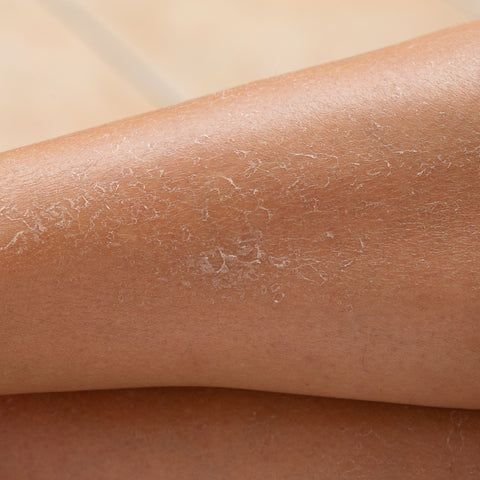
The stratum corneum is the outermost few micrometres of skin, built from flattened cells held together by a lipid matrix. It behaves like brickwork with mortar: the mortar stops water escaping outward and irritants moving inward.
Soak that layer and it swells. Let it dry and it contracts. Do that daily, at 42 degrees, with a foaming cleanser that lifts surface lipids by design, and the cycle runs a few hundred times a year. The tight feeling twenty minutes after towelling off is that contraction, not dehydration in any deep sense.
Chlorine adds a second variable. It is an oxidant, which is the entire point of using it, and oxidants react with proteins and lipids rather than passing over them inertly. The clearest evidence here comes from Seki and colleagues, writing in the Journal of Dermatology in 2003. They found that chlorinated water at 1.0 and 2.0 mg/L significantly reduced stratum corneum hydration in patients with atopic dermatitis. Those concentrations sit inside the range PUB reports for Singapore, which is the reason the question of whether chlorine causes skin irritation at shower concentrations keeps coming up locally.
Note the population. That study looked at atopic dermatitis patients, not everybody, and stretching it further would be dishonest. Heat compounds the effect independently, which is covered in more detail in our look at how water temperature changes chlorine exposure during a shower.
The obvious objection: if the water is safe, why discuss it
Fair challenge. PUB’s water meets WHO guideline values, is tested hundreds of thousands of times a year, and is safe to drink from the tap. Nothing here disputes that, and any brand that tries to frighten you about Singapore’s water supply is worth walking away from.
The distinction is narrower than that. Drinking water standards govern what happens when you swallow roughly two litres a day, most of which your gut handles without incident. They were never written to describe what ten minutes of daily skin contact at 40 degrees does to a lipid barrier. Safe to drink and optimal for prolonged skin contact are two different questions, and only the first one has a regulatory answer.
The honest state of the science supports that framing without overreaching. Perkin and colleagues, in the Journal of Allergy and Clinical Immunology in 2016, examined domestic water and eczema in infancy and concluded that chlorine’s specific influence remains uncertain. Uncertain is the accurate word. Anyone quoting that literature as settled proof is selling something.
Who this matters for, and who can ignore it entirely
Worth your attention if you have diagnosed atopic dermatitis or eczema, if your skin reads as dry or reactive year round, if you shower twice daily because of the climate or the gym, if you have small children who bathe every evening, or if you have already optimised cleanser and moisturiser and are still getting tightness within half an hour of drying off.
Not worth your money if your skin is comfortable, if you shower briefly in cool water, or if the tightness only started after you changed body wash. If the tightness tracks the new cleanser, the water was never the culprit, and a filter will not fix it.
Practical changes, cheapest first
Start with the adjustments that cost nothing. They usually account for more of the problem than water chemistry.
- Drop the temperature until the water reads warm rather than hot. Contact time and heat are the two biggest levers you control.
- Shorten the rinse. Eight minutes instead of fifteen is a meaningful reduction in total exposure across a year.
- Apply moisturiser onto skin that is still slightly damp, within about three minutes of stepping out.
- Ventilate. An extractor fan pulls volatile chloramines out of the air instead of leaving them to concentrate in an enclosed HDB bathroom.
Give those two weeks before adding hardware. Hair responds on a similar timeline, and the same logic applies to how local water quality shows up in hair moisture.
Where point-of-use filtration fits
If the free changes have not moved anything, the remaining variable is the water arriving at the head. Designed for exactly that job, the Vitae Infusion cartridge holds 25,000 mg of vitamin C and helps neutralise the chlorine residual as water passes through, converting it to a less reactive form before it reaches skin. It helps neutralise chlorine. It does not remove all of it, and no honest filter claim says otherwise.
Two routes exist depending on whether you want to keep your current fitting. Priced at S$49.90, the Universal retrofit filter threads between your existing hose and head, and the full universal shower filter range sits here. If you would rather replace the head itself and get the Aera Flow spray plate at the same time, the vitamin C shower head range starts with the Radiance handshower at S$149, with the Nourish at S$99 and the Aura overhead at S$249. Refills run S$29.90 each, or three for S$74.90, and each one lasts two to three months in normal household use. Refill timing is covered in our guide to how often a shower filter needs replacing.
Expect nothing dramatic in week one. The realistic pattern is a change in how skin feels immediately after showering within the first fortnight, followed by a slower shift in overall comfort over a month or two. If nothing has changed after eight weeks, the water was not your problem, and the honest read on whether a shower filter is worth it here covers that scenario too.
Frequently asked questions
Is Singapore tap water bad for skin?
No. It meets WHO guideline values and is safe for both drinking and washing. The narrower point is that a disinfectant residual averaging 2.27 mg/L is optimised for pipe safety rather than for prolonged skin contact, and sensitive skin can register that difference.
Does Singapore have hard water that dries skin out?
No. PUB reports an average total hardness of 42.7 mg/L, which falls in the soft category. Hardness is not the cause of dryness here.
Why does my skin feel tight only after hot showers?
Heat speeds the swell-and-contract cycle of the stratum corneum and drives chloramines into the air faster, which is why the smell intensifies at the same time.
Will a shower filter help eczema?
A filter is not a treatment for any skin condition and should not replace dermatological care. Reducing chlorine contact is a comfort measure, and anyone managing diagnosed eczema should raise it with their doctor rather than substituting hardware for advice.
Does boiling or letting water stand remove the chlorine?
Not usefully for showering, since you cannot stand a shower’s worth of water overnight. Chloramine is also far more persistent than free chlorine, which is why boiling does less than most people assume.
How long does a SUHAE Vitae refill last?
Two to three months for a typical household, depending on how many people use the shower and how long each shower runs. The warranty on SUHAE hardware covers functional parts only, and does not extend to labour or transport.
References
- PUB, Singapore Drinking Water Quality, January to December 2025. pub.gov.sg
- PUB, Water Treatment, on chloramine as a stable chlorine residual. pub.gov.sg
- Seki T et al. Journal of Dermatology, 2003. PMID 12692355. pubmed.ncbi.nlm.nih.gov
- Perkin MR et al. Journal of Allergy and Clinical Immunology, 2016. PMID 27241890. pubmed.ncbi.nlm.nih.gov
If you have already tried the free adjustments and want to change the water itself, the sensible next step is to compare the three heads side by side and see which flow rate and mounting suits your bathroom before committing to anything.
