
Skin Care
Does Chlorine Cause Skin Irritation: Shower Water Exposure in Singapore
Mar
Quick answer: For most people, chlorine at the levels found in Singapore tap water does not cause irritation in any clinical sense, though it can contribute to the dry, tight feeling many notice after showering. The one group with published evidence behind it is people with atopic dermatitis, where chlorine at 1.0 and 2.0 mg/L was shown to reduce skin hydration. Chlorine skin irritation is therefore a real question with a narrow honest answer, not a blanket yes.
Most people arrive at this question after the obvious fixes have failed. New body wash. Thicker moisturiser. Shorter showers. When the tightness survives all three, water becomes the last unexamined variable in the room.
The mechanism: what chlorine does to the skin surface
Your outermost skin layer, the stratum corneum, is a lattice of flattened cells held together by lipids. That lipid matrix is what stops water escaping. It is also, chemically speaking, exactly the kind of organic material an oxidising agent will act on.
Chlorine is an oxidiser. That property is the entire point of putting it in the water supply, because it does the same thing to bacterial cell walls. When chlorinated water runs over skin, some of that oxidative activity meets surface lipids rather than microbes. The effect from any single shower is negligible. The interesting variable in Singapore is repetition, since twice daily showering in this climate is normal rather than excessive, and the cumulative picture is what actually matters for hydration.
What is in the water is documented. PUB’s figures for January to December 2025 give an average chlorine level of 2.27 mg/L, range 1.43 to 2.87 mg/L, with monochloramine averaging 2.10 mg/L. PUB explains why the residual persists: “Ammonia is added to the treated water to form chloramines, a more stable chlorine residual.” Stability is a feature of the system and the reason chlorine is still present when water reaches your bathroom.
The objection: is this just fear marketing
Often, yes, and the scepticism is earned. Plenty of filter brands imply that municipal water is doing damage. That framing is wrong and we will not use it.
Singapore’s water meets WHO guidelines and is safe to drink from the tap. Two further myths deserve burying. Singapore does not have hard water: PUB’s average total hardness was 42.7 mg/L, comfortably inside the soft range, so the limescale complaints you read on overseas forums do not transfer here. And nothing about the supply is unsafe.
What survives all that is a narrower point. Safe to drink is not the same as optimal for ten minutes of daily skin contact. Those are different exposure profiles, and drinking water standards address only the first.
The evidence follows the same shape. Seki and colleagues, in the Journal of Dermatology in 2003, reported that chlorine at 1.0 and 2.0 mg/L significantly reduced stratum corneum hydration in patients with atopic dermatitis. Real finding, specific group. It has not been demonstrated for people without that condition, and any brand extending it to everyone is overreaching. Perkin and colleagues, in the Journal of Allergy and Clinical Immunology in 2016, studied water and eczema risk in infancy and concluded that chlorine’s influence “remains uncertain”. That is the state of the science, and pretending otherwise would be easier and worse.
Who this applies to, and who it does not
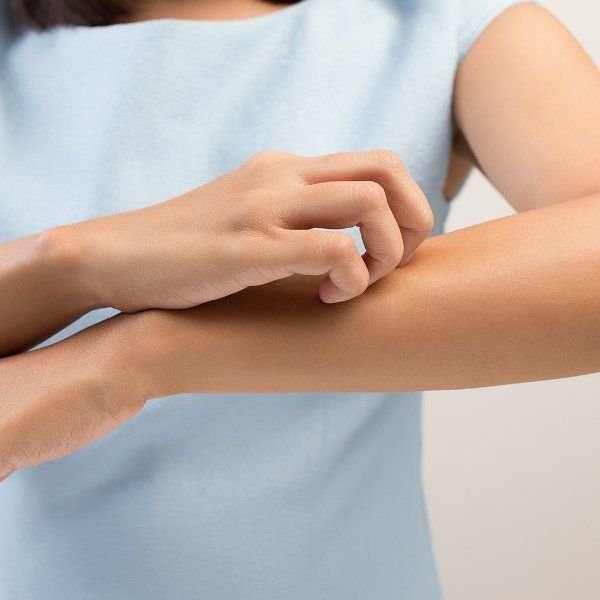
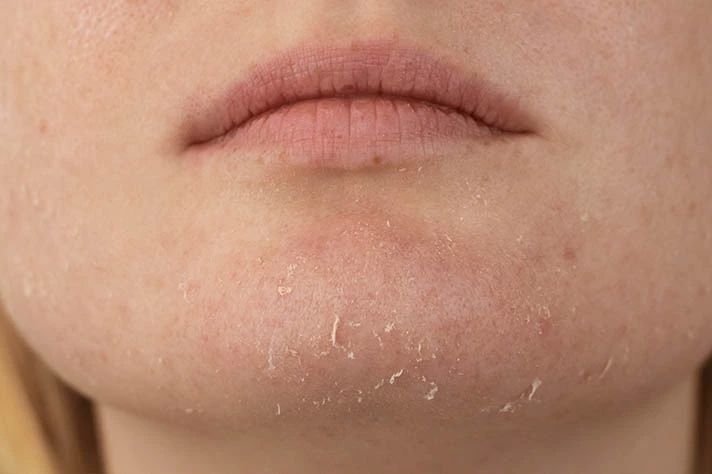
Consider water as a factor if your skin feels tight within minutes of towelling off, if the dryness is worse on days you shower twice, if you already know pool water leaves your skin uncomfortable, or if moisturiser feels like it is being reapplied against something rather than solving it. Rough patches on shins and forearms, the areas with the thinnest natural oil, tend to show it first. Some of the other everyday signs are easy to check for free.
This is not for you if you are looking for a cure. A shower filter does not treat eczema, dermatitis, psoriasis or any diagnosed condition, and nothing sold here should ever be presented that way. If your skin is genuinely irritated, meaning red, broken, weeping or persistently itchy, see a doctor. Water is at best a background variable in that conversation. It is also not for you if your skin is comfortable, in which case there is nothing here to fix.
Practical guidance, in order of cost
Lower the temperature before anything else. Warm rather than hot reduces both lipid loss and the volatility of the residual, and it is free.
Cut shower length. Contact time is the variable you control most directly.
Moisturise on damp skin within about three minutes of stepping out, while the surface is still hydrated. Switch to a non foaming cleanser if yours strips.
Only after those, look at the water itself. The most economical way in, and the one that requires no plumbing and no change to your existing shower head, is a universal retrofit filter fitted between hose and handset at S$49.90. It suits rented units and bathrooms whose fittings you would rather not touch. Inside it, the Vitae Infusion cartridge carries 25,000 mg of vitamin C and helps neutralise chlorine, converting it to chloride before the water reaches skin. Refills are S$29.90, or three for S$74.90, and each lasts roughly two to three months.
If you would rather replace the whole handset, the shower heads built around the same cartridge run from the Nourish at S$99 to the Radiance at S$149, with the Aura overhead at S$249. Before spending on either, it is worth knowing what a shower filter genuinely removes and what it leaves behind. Warranty covers functional parts only, not labour or transport.
A realistic timeline
Weeks one and two bring one reliable change, which is the smell of the cubicle. Skin claims this early are not credible.
Months one and two are the first fair test, because skin renews on roughly a monthly cycle. Hold the rest of your routine steady so you can attribute any change. By months three to six you will know whether it mattered, and by then how often the cartridge needs changing in this humidity is the thing determining whether the benefit holds.
Frequently asked questions
Can chlorine in tap water cause a rash?
Contact reactions to chlorine are recognised but uncommon at municipal residual levels. A rash deserves a doctor rather than a filter.
Why does my skin feel worse after a pool than after a shower?
Pool water is chlorinated far above tap levels and exposure lasts much longer. The mechanism is the same, the dose is not.
Is it the chlorine or the hot water?
Often the heat, honestly. Test by dropping the temperature for two weeks and changing nothing else before you buy anything.
Does moisturiser make a filter unnecessary?
They work at different points. One replaces what was lost, the other reduces what removes it. Most people should try the cheap one first.
Is a shower filter worth the money for dryness alone?
It depends how much of your discomfort is water related, which nobody can tell you in advance. There is an honest cost breakdown for Singapore households worth reading first.
Will a SUHAE filter stop my skin irritation?
No, and we will not claim it will. It helps neutralise chlorine in the water, which is one variable among several. Irritation itself is a matter for a doctor.
References
- PUB, Singapore Drinking Water Quality, January to December 2025
- PUB, Water Treatment
- Seki T et al., Journal of Dermatology, 2003 (PMID 12692355)
- Perkin MR et al., Journal of Allergy and Clinical Immunology, 2016 (PMID 27241890)
If you want to test whether water is part of your dryness without committing to a new shower head, the universal retrofit filter is the least expensive way to find out, and it comes off again in a minute if the answer is no. Fitting questions are welcome at admin@suhae.sg or +65 8988 1336.
