
Water Quality & Chlorine
Rust in Shower Water: Why It Happens in Singapore Homes
Oct
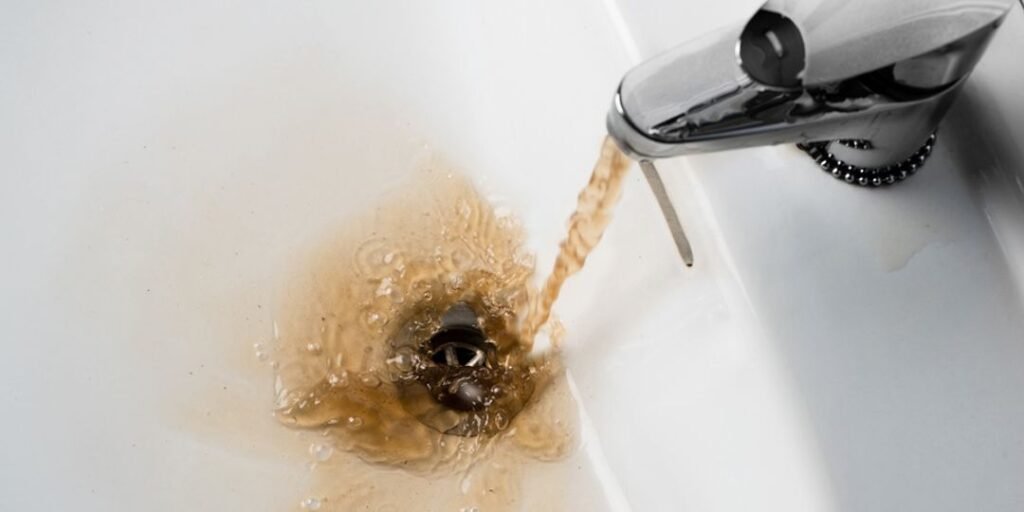
Rust in shower water almost always enters after the water has left PUB’s mains, picked up inside your own building. The usual sources are corroding galvanised pipework in an older block, a storage water heater whose tank is past its service life, or a rusting hose or fitting at the shower itself. Which outlets it shows up at, and whether it clears after a minute of flow, narrows it down fast.
Most people run the tap for a minute, watch it go clear, and put it down to nothing. Then it returns the next morning, or a pale towel comes out of the wash carrying an orange shadow. Rust is an unglamorous subject, but it is one of the few water complaints where the cause is findable at home in about ten minutes.
Where rust in shower water actually comes from
Water arriving at your block has been treated and tested. PUB conducts over 500,000 tests annually, works through a laboratory accredited by SAC-SINGLAS to ISO/IEC 17025, and has been a WHO Collaborating Centre since 2012. Rust is not a treatment problem. It is picked up on the last stretch, after the water leaves the mains and enters pipework the building owns.
Iron and steel corrode wherever water and oxygen reach bare metal. The corrosion sits as a rough deposit inside a pipe or tank until something disturbs it: a pressure change, a pump cycling, a neighbour drawing hard on the same riser, the first flow of the morning. Then it travels, and your shower head becomes the sieve that shows you what came through the hose.
- Galvanised iron pipework. Older blocks were plumbed in steel pipe coated with zinc. Once that coating wears through, the steel underneath oxidises and flakes shear away when flow changes. Brown water at every outlet, worst first thing in the morning, points here.
- A storage water heater. A storage tank holds a steel vessel with a glass lining and a sacrificial anode rod, designed to corrode so the tank does not. Once the anode is spent, the tank corrodes instead, and rust in the hot water only is the signature. Instant heaters hold no standing water and do not fail this way, though they bring their own considerations at the shower.
- The shower hardware. A hose with a steel inner braid, a rusting shower arm, corroded screws behind the wall plate. One outlet affected while the rest of the flat runs clear puts the fault within a metre of where you stand.
- Disturbed sediment. Mains work nearby, a tank cleaning, a sudden pressure change: deposit already settled in the building’s pipes lifts and moves. It clears on its own, then returns next time something stirs it.
The part that sounds like a contradiction
Two things hold at once: the supply meets WHO guidelines, and the water at your shower is brown. PUB’s responsibility runs to the point of supply. The riser beyond it, the branch into your flat and the heater in your service duct belong to the building and to you, so rust there is a plumbing condition and gets treated as one.
That line decides who to call. Brown water at every tap in the flat, and in your neighbours’ flats, is a building matter for the town council or managing agent, and worth reporting to PUB so the cause gets traced. One outlet is yours to sort out.
Check first: whether rust is really what you have
Rust reads orange, tan or reddish brown, it settles out if you stand a glass of it on the counter, and it marks a white cloth held under the flow. Several other things get mistaken for it, and each has a different fix.
- Black or grey flecks rather than orange ones usually mean biofilm from inside the hose, which calls for cleaning rather than filtration.
- A sharp smell with visibly clear water is chlorine or chloramine rather than rust, and nothing about it is particulate.
- White or chalky marks on the screen door are mineral residue. Singapore’s supply averages 42.7 mg/L total hardness, which classifies as soft, so these are more often soap scum than scale.
A filter at the point of use earns its place once you know you are dealing with particulate, because it catches what is already in the water at the last metre before it reaches you. The corroding riser behind the wall is the one thing it cannot reach, and that stays a plumbing job.
Three ways to deal with it, in the order that makes sense
1. Test and trace: the step that comes before buying anything
Run the cold tap at the basin for two minutes, then the hot, then the shower, and note which ran clear and which stayed brown. Repeat it the next morning. Then knock on two doors or ask in the block chat group, because if the brown water is shared, the cause sits upstream of your flat and the repair is not yours to fund.
- Best for: everyone, before spending anything on the two routes below.
- Check first: that you test at the same time of day, since overnight standing is what makes morning water worse.
2. Replace the corroding part: the only route that removes the source
A rusting hose or shower arm is a parts swap. A heater with a spent anode is a service call, sometimes a replacement unit. Work on the water service pipes themselves has to go to a PUB-licensed water service plumber, while swapping a hose or a head is generally a job you can do yourself.
- Best for: a single affected outlet, visible corrosion on the hose or arm, or rust confined to the hot tap.
- Check first: your tenancy terms, because fixtures in a rented flat usually belong to the landlord.
3. A filter at the head: the stage that catches particulate before it reaches you
Fitted between the hose and the head you already own, the SUHAE Universal retrofit filter at S$49.90 adds a filtration stage without changing anything else. It is built around the Purea Core, a three-step cartridge made from SGS-tested materials with no detectable cadmium, lead, mercury or chromium VI. The filtered handshowers carry the same stage with a head included: the Nourish at S$99, the Radiance at S$149 with one Vitae refill.
- Best for: occasional particulate, a flat you rent, or a block where the riser repair is years away. Compare the universal shower filters to keep your existing head.
- Check first: that the discolouration is intermittent. Constant brown water means the source is still actively corroding, and a cartridge will load up quickly against it. The filtered handshowers suit the same conditions with a new head.
What to expect
Week 1 to 2. The flush log gives you a pattern, and you will know whether this is a hot-water fault, an outlet fault or a building one. A filter fitted now catches visible rust in shower water straight away, which shows as a cleaner cloth test rather than anything you feel.
Month 1 to 2. A cartridge working against real sediment discolours, which is the honest signal that it is doing something. Plan on replacing it every two to three months, sooner where rust is active.
Month 3 to 6. If the source was hardware, the problem is gone. If it was the riser, you are managing a condition rather than fixing it, and the useful question becomes whether the town council has the repair scheduled.
Frequently asked questions
Why is the rust only in my hot water?
Because the hot side has one component the cold side does not. A storage tank whose anode has been used up corrodes from the inside, and the hot tap is the only place it shows. Instant heaters hold no standing water, so a hot-only pattern there points at the pipe run instead.
Does rust in the water mean the whole flat needs repiping?
Usually not. Hardware and heater faults are far more common than failed risers, and both cost less to resolve. Repiping becomes the conversation when every outlet is affected, the flow has dropped too, and the block is old enough to have been plumbed in galvanised steel.
Will rust mark the bathroom or the laundry?
Iron oxide is a pigment, so it marks porous surfaces readily. Grout lines and light-coloured fabric show it first, and the marks lift more easily while fresh.
Does boiling or standing the water help?
Standing it lets the particles settle, which is why a glass left on the counter separates. Boiling does nothing to rust, since the particles are solid and stay behind. Similar logic applies to boiling and chlorine.
Will a shower filter slow the water down?
Any added stage introduces some resistance, though the effect depends far more on head design than on the cartridge. Covered properly in our piece on whether shower filters change water pressure.
Which SUHAE option suits a flat that gets rust now and then?
Designed for this case, the Universal retrofit filter at S$49.90 keeps your existing head and adds the Purea Core stage behind it. Households changing the head anyway tend to go to the Nourish or the Radiance, which carry the same cartridge. Refills run two to three months in normal use, shorter where sediment is active, and the warranty covers functional parts only.
References
- PUB, Water Quality: testing volume, SAC-SINGLAS ISO/IEC 17025 accreditation, WHO Collaborating Centre status. pub.gov.sg/Public/WaterLoop/Water-Quality
- PUB, Singapore Drinking Water Quality, January to December 2025: total hardness average 42.7 mg/L. Singapore Drinking Water Quality (PDF)
- PUB, Water Treatment: chloramine as the stable chlorine residual. pub.gov.sg/Public/WaterLoop/Water-Treatment
Rust in shower water comes down to finding which stretch of pipe is shedding it, so start with the two-minute flush test at each outlet, because it costs nothing and it decides everything after it. If the answer is intermittent particulate rather than a riser due for replacement, a filtration stage at the head is the part you can put in place this week, and the showroom at T-Space, #01-18, 1 Tampines North Drive 1, Singapore 528559 runs the filters on mains pressure if you would rather see one working first.
