
Buying Guides
High Pressure Shower Head Singapore: What the Label Actually Means
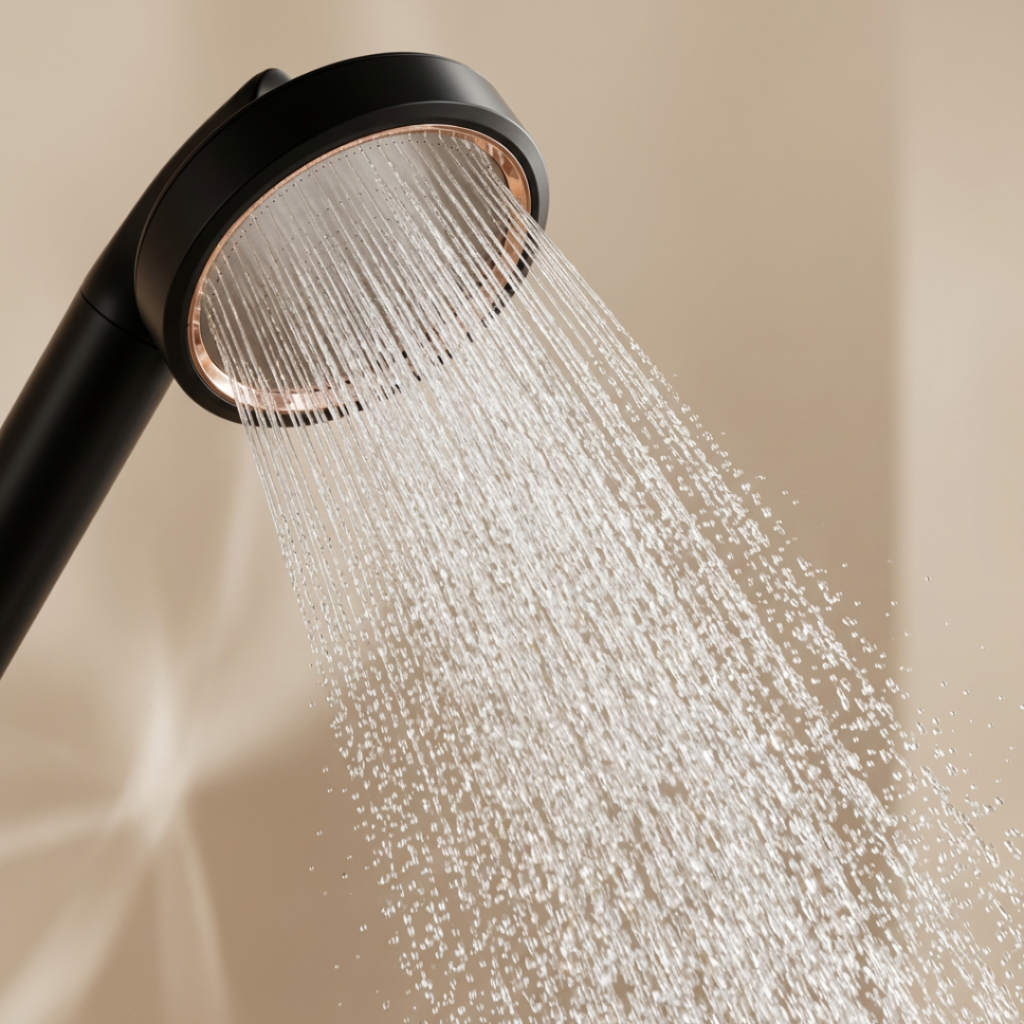
Sep
A high pressure shower head does not add pressure to your pipes. It changes the way water leaves the head, usually by forcing the same flow through smaller openings so the spray lands faster and feels firmer against skin. Anyone shopping for a high pressure shower head in Singapore is really shopping for spray velocity, because both the supply pressure and the legal flow rate are settled before the head is ever fitted.
Most people arrive at this search after trying the obvious things. The filter screen has been cleaned, the stopcock is fully open, the hose has been swapped once already. The shower still feels thin, and the next idea on the list is a high pressure shower head off the shelf. That idea is not wrong. It is narrower than the packaging suggests, and knowing which part of the problem a head can fix will stop you buying the same disappointment twice.
Where the force in a shower actually comes from
Three separate things decide how a shower feels, and only one of them sits inside the head.
The first is supply pressure, set by the network outside your flat. In a written parliamentary reply on water pressure, the Ministry of Sustainability and the Environment stated that PUB reticulates water at a pressure sufficient to reach 25 metres above mean sea level. Taller buildings rely on pumps and storage tanks. Either way, your flat’s share is decided before the water reaches the bathroom door.
The second is flow rate, measured in litres per minute. It is capped by regulation, and that cap is the reason the whole category exists.
The third is spray velocity: how fast each individual stream is travelling when it reaches skin. This is the only one a shower head controls, and it is what people are describing when they say a shower feels strong. Two heads passing identical litres per minute can feel nothing alike, because velocity depends on the size of the opening the water is squeezed through rather than the volume sitting behind it.
One check is worth doing first. If every tap in the flat runs weak, not just the shower, the problem is upstream and no head will repair it. The order to work through is in our guide to tracing a weak shower from the stopcock inwards.
The objection: is a stronger spray just a way to use more water
It would be, if flow rate were unregulated here. It is not.
Under PUB’s Water Efficiency Labelling Scheme, shower taps and mixers earn three ticks at 5 litres per minute or less, and two ticks above 5 and up to 7. From 01-04-2019, a minimum of two ticks became mandatory for shower fittings sold in Singapore. A head sold here legally cannot buy a stronger feel by pushing more water through, because the ceiling is written into the rating it has to carry.
That leaves velocity as the only lever a manufacturer has. A well designed head makes 5 or 6 litres per minute feel like more than it is, with no increase in consumption. Some reduce it. If the real goal is a smaller bill rather than a firmer spray, the figures are in our piece on what genuinely cuts shower water usage.
A related worry comes up almost as often. Adding a cartridge to the flow path sounds like it ought to cost you pressure, and a poorly made one will. We took that question apart on its own in whether a shower filter changes water pressure.
Who should look at a high pressure shower head, and who should not
Whether a high pressure shower head is right for you is worth settling before any product comparison, because the category suits a specific situation.
Worth considering if:
- You live high up in a block, or in an older resale flat with long pipe runs, and the shower is noticeably weaker than the kitchen tap.
- Rinsing conditioner out takes longer than it used to, and the plumbing has already been ruled out.
- You want a shorter shower without it feeling like a compromise.
Skip it if:
- Every outlet in the flat runs weak. That is a supply or stopcock issue, and a new high pressure shower head will only move the disappointment along.
- You prefer broad, soft rainfall coverage. Concentrated jets are the opposite of that, and the trade-off is set out in rain shower against handheld in an HDB flat.
- The bathroom is being renovated anyway. Sequence matters more than product choice at that point, which is the subject of what can be changed without renovating and what to change first in a new flat.
One caveat belongs here rather than in the small print. More force is not automatically better. Longer and harder showers increase the time skin spends in contact with whatever the water is carrying, and PUB’s own 2025 figures put average monochloramine at 2.10 mg/L. We made that case in full in why stronger is not always the goal.
Four things that actually change how a shower feels
A high pressure shower head is a bundle of four design decisions, and they do not carry equal weight. Working down the list in order is usually cheaper than working up it.
1. Spray hole geometry: the smaller opening does the work
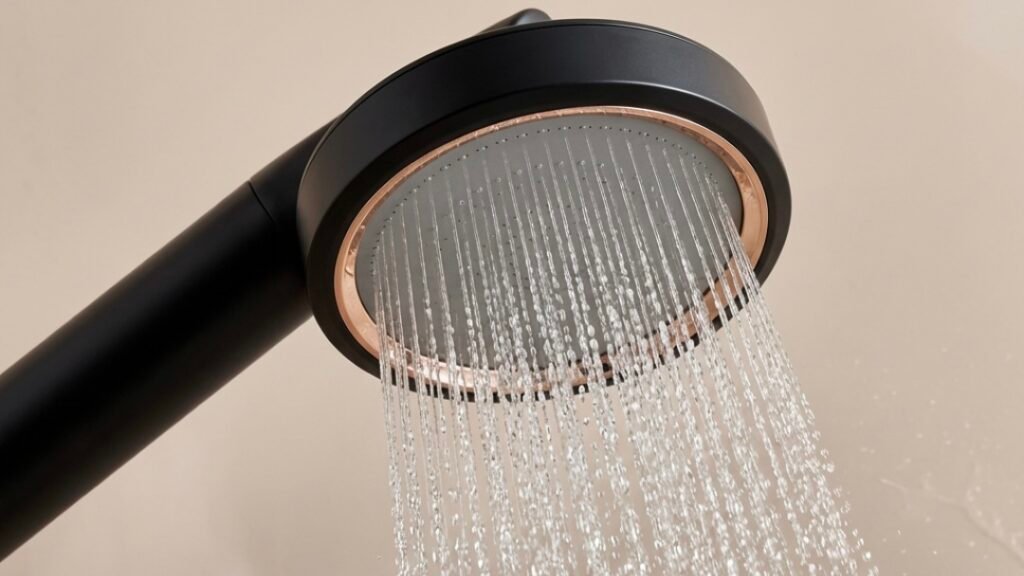
Nozzle shape is where most of the difference lives. Narrowing the cross-section of each opening raises the exit velocity of the water passing through it, which is why a plate of many fine jets can feel firmer than a plate of fewer wide ones at the same flow rate. Built around triangular micro-jet openings, the Aera Flow plate used across the SUHAE range is rated by the manufacturer at up to 50 percent stronger perceived pressure and 30 to 50 percent water savings against a conventional head. Perceived is the operative word there. Any brand that quietly drops it is overselling.
- Best for: flats where the supply is adequate but the spray feels loose and unfocused.
- Skip if: you find fine jets prickly on the face or scalp.
2. Plate size and hole count: concentration against coverage
A wide overhead plate spreads the same flow across more area, so each stream carries less energy. A compact handshower does the reverse. This is a trade-off rather than a quality difference, and it explains why the same person can find an overhead luxurious to stand under and useless for rinsing long hair. Sized for a standard HDB or condo bathroom, the Aura overhead at S$249 sits at the coverage end, while the Radiance handshower at S$149 and the Nourish at S$99 sit at the concentrated end.
- Best for: anyone who knows which of the two they actually shower with day to day.
- Skip if: the bathroom already has a fixed rain head you cannot remove, in which case a handheld on a diverter is the cheaper fix.
3. What sits in the flow path
Anything between the hose and the spray plate takes a small share of the energy. A well engineered cartridge takes very little, and a cheap one takes a great deal. This is the part worth asking about, because it is where filtered heads either justify themselves or quietly disappoint. Designed as a three-step cartridge rather than a single packed layer, the Purea Core is the component doing that work in the SUHAE units, and the vitamin C stage that follows it helps neutralise the chlorine already present in treated supply. Refills run 2 to 3 months at S$29.90 each, or three for S$74.90.
- Best for: people who want filtration and firmness from one purchase instead of stacking two devices.
- Skip if: you are unwilling to keep buying replacement refills, since a spent cartridge is just a restriction.
4. The hose, the connector and the wall arm
Kinked hoses, part-closed angle valves and old connectors cost more pressure than most people expect, and they cost it invisibly. Replacing a hose or a showerhead is on PUB’s list of works needing no licensed plumber, so this is the cheapest thing here to test. Priced at S$49.90, a universal retrofit unit keeps the head you own and changes only what sits in front of it, which makes it the honest first experiment before committing to a high pressure shower head. The practical routes are in fitting a shower filter in an HDB flat.
- Best for: renters, and anyone testing the idea before committing to a full head.
- Skip if: the existing head is already old, scaled or leaking, in which case replacing it outright costs less than doing both.
What to expect
Week 1 to 2. The change in feel after fitting a high pressure shower head is immediate and slightly disorienting. Most people overshoot the mixer for the first few days, because a faster spray reads as hotter than it is. Rinse times drop first, which is usually the clearest signal that anything changed.
Month 1 to 2. Shower length tends to settle shorter without deliberate effort. If the unit carries a filter, this is also when the first cartridge reaches the end of its useful life, and the drop-off in feel is a fair test of how much it was contributing.
Month 3 to 6. By now the comparison is against memory rather than yesterday, so the honest test is a hotel or the guest bathroom. Warranty on SUHAE units covers functional parts only, and the hose and seals are what need attention by this stage rather than the head.
Frequently asked questions
Can a shower head increase my water pressure?
No. It cannot change the pressure arriving at the outlet. What it changes is the speed of the water leaving it, which is what registers as strength on skin.
Will a high pressure shower head raise my water bill?
Not if it is properly rated. WELS caps shower fittings at 7 litres per minute for two ticks and 5 for three, so a compliant head cannot quietly increase consumption. Several designs reduce it.
Does Singapore’s water hardness affect shower pressure?
Very little. PUB’s 2025 report puts average total hardness at 42.7 mg/L, which classifies as soft, so scale buildup inside a head is slower here than in many other cities. Blocked nozzles are more often soap residue than mineral deposit.
My shower is weak only in the morning. Is a new head the answer?
Probably not. Time-of-day variation points to demand across the block rather than to your fitting, and a head cannot compensate for a supply dip.
Do I need a plumber to change a shower head?
PUB lists replacing or removing a shower hose or showerhead among the works that do not require a licensed plumber. Most swaps take a few minutes with a cloth and hand pressure.
Which SUHAE unit gives the firmest spray?
Among the current range the Radiance handshower concentrates the flow most tightly, and the Nourish is the smaller sibling of the same idea. Anyone who wants coverage rather than concentration should be looking at the Aura instead, and the differences between them are laid out across our vitamin C shower head range.
References
- Ministry of Sustainability and the Environment, Written Reply to Parliamentary Question on Water pressure. Reticulation pressure sufficient to reach 25 m above mean sea level.
- PUB, Water Efficiency Rating and Requirements. Shower taps and mixers: 3 ticks at 5 L/min or less, 2 ticks above 5 to 7, mandatory 2 ticks and above from 01-04-2019.
- PUB, Plumbing Works. Replacing or removing a shower hose or showerhead does not require a licensed plumber.
- PUB, Singapore Drinking Water Quality, January to December 2025. Monochloramine average 2.10 mg/L, total hardness average 42.7 mg/L.
- PUB, Water Treatment. Ammonia is added to treated water to form chloramines, a more stable chlorine residual.
If the plumbing has already been checked and the shower still feels thin, a high pressure shower head is the next honest thing to try, and it is the one part of the chain you can swap yourself in an afternoon. Comparing the three handshower plates side by side is the quickest way to work out whether you want concentration or coverage. The units are also on display at the showroom at T-Space, #01-18, 1 Tampines North Drive 1, Singapore 528559.
