
Hair Care
How Water Quality Impacts Hair Structure
Apr
Quick answer: Water quality affects hair mainly through two variables, dissolved minerals and disinfectant residual, and in Singapore only the second one is in play. Hardness here averages 42.7 mg/L, which is soft, so mineral buildup is not your problem. Water quality hair damage in a Singapore bathroom is a question about chlorine and chloramine acting on the cuticle, repeated twice a day for years.
Hair that behaves badly usually gets blamed on shampoo. That is a reasonable first guess and often the right one. It is also the only variable most people ever change, which is why the ones who have already changed it three times end up reading about water.
The mechanism: how the cuticle actually fails
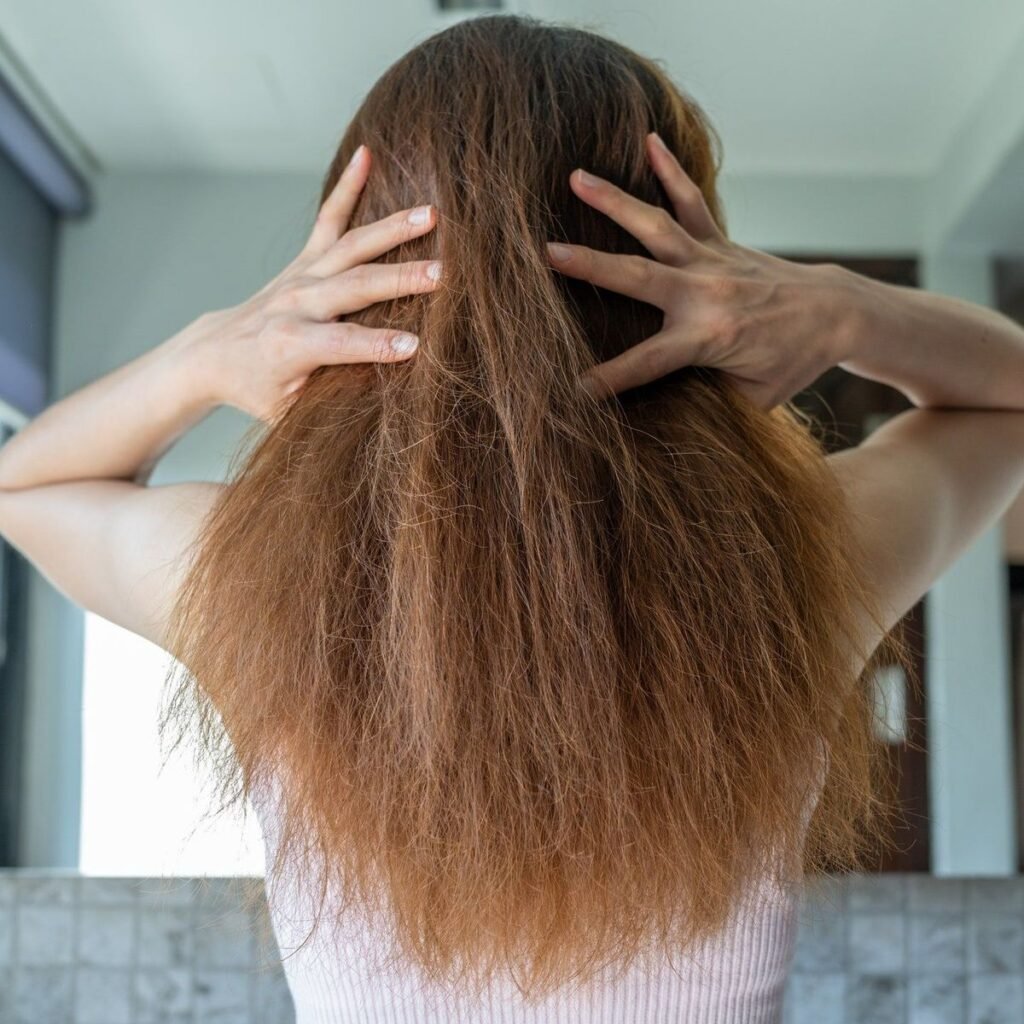
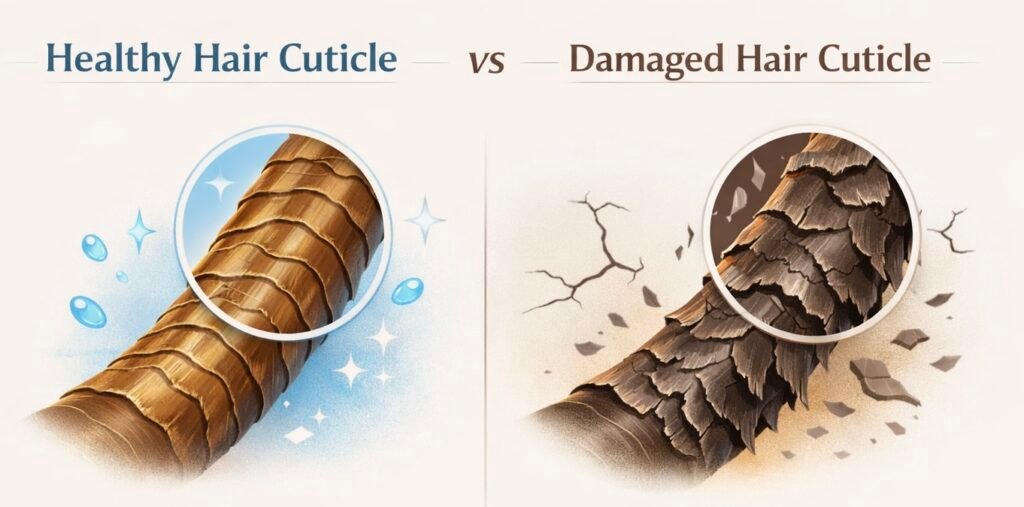
A hair shaft is keratin protein wrapped in overlapping scales called the cuticle. When those scales lie flat, light reflects evenly and the hair feels smooth. When they lift or fracture, hair snags on itself, loses moisture faster, and reads as dull and frizzy regardless of what you put on it.
Three things lift the cuticle. Mechanical stress from brushing and towelling. Chemical processing from bleach, dye and relaxers. And oxidation, which is where water comes in.
Chlorine is an oxidising agent, chosen precisely because it reacts readily with organic material. Keratin and the lipid layer coating each shaft are organic material. Any single shower matters very little. Two showers a day in a tropical climate, over the two to six years a long hair fibre spends growing, is a different sum, and it stacks on top of whatever the sun and the hairdryer have already done. That accumulation is the whole argument, and it is why moisture retention is the symptom people notice first.
What Singapore water actually contains
PUB publishes the numbers, so there is no need to guess. For January to December 2025, average chlorine was 2.27 mg/L across a range of 1.43 to 2.87 mg/L. Monochloramine averaged 2.10 mg/L. Total hardness averaged 42.7 mg/L. Average pH was 8.0.
That hardness figure deserves attention because it contradicts a claim you will see repeatedly on filter websites. Water at 42.7 mg/L is soft. The calcium and magnesium deposits that leave hair coated and stiff in London or Perth are not happening in your HDB bathroom, and anyone telling you otherwise has not read PUB’s own hardness measurements. If you moved here from a hard water city, your hair very likely improved.
The chloramine number is the one that carries. PUB states that “Ammonia is added to the treated water to form chloramines, a more stable chlorine residual”, which is a deliberate engineering decision to keep the disinfectant working through kilometres of pipe. It also means the residual is still present at the shower head rather than dissipating on the way.
The objection: hair is dead, so how can water damage it
This gets raised constantly and it is half right. The visible hair shaft has no living cells and no repair mechanism. Nothing you apply repairs it in any biological sense, whatever the packaging says.
That is exactly why the point holds rather than defeats it. Skin renews itself monthly. Hair does not renew at all. Every bit of cuticle damage a fibre accumulates stays with it until it is cut off, which means the case for reducing exposure is stronger for hair than for skin, not weaker.
Be sceptical about how far anyone extends this, including us. Singapore’s tap water meets WHO guidelines and is safe to drink. The narrow honest claim is that safe to drink is not the same as optimal for ten minutes of daily contact. On skin, the closest published evidence is Seki and colleagues in the Journal of Dermatology in 2003, who found reduced stratum corneum hydration at 1.0 and 2.0 mg/L chlorine in patients with atopic dermatitis, a result specific to that group. Perkin and colleagues in the Journal of Allergy and Clinical Immunology in 2016 concluded that chlorine’s influence on eczema risk “remains uncertain”. Neither study is about hair. We are describing a mechanism, not a proven outcome, and it would be easy and dishonest to blur the two.
Who this is for, and who it is not for
Water is worth examining if your hair is bleached, highlighted or chemically straightened, since processed cuticles are already compromised and colour fade in particular responds to what you rinse with. Also if you wash daily rather than every second or third day, if you have long hair whose ends are several years old, if you swim regularly on top of showering, or if conditioner has stopped seeming to do anything.
Not for you if you are dealing with shedding or thinning. That is a scalp and follicle question with medical causes, and no shower filter addresses it. The honest answer about shower water and hair loss is more cautious than the internet suggests, and a doctor is the right first stop. Also skip this if your hair is short, unprocessed and behaving well, in which case water is not your bottleneck.
Practical guidance, in the order worth trying
Wash hair less often than you shower. Rinsing your body daily does not require shampooing your scalp daily, and separating the two halves the exposure immediately.
Finish with cooler water. Warm water swells the shaft and lifts the cuticle. A cooler final rinse helps it settle.
Wet hair before swimming, so the fibre absorbs clean water first and takes on less pool water. Blot rather than rub with the towel, since wet hair is at its most fragile.
Then, if the habits are already right, change the water. Sitting inside every model, the Vitae Infusion cartridge carries 25,000 mg of vitamin C and helps neutralise chlorine by converting it to chloride before the rinse reaches your hair. Refills are S$29.90 each, or three for S$74.90, and one lasts roughly two to three months in daily use.
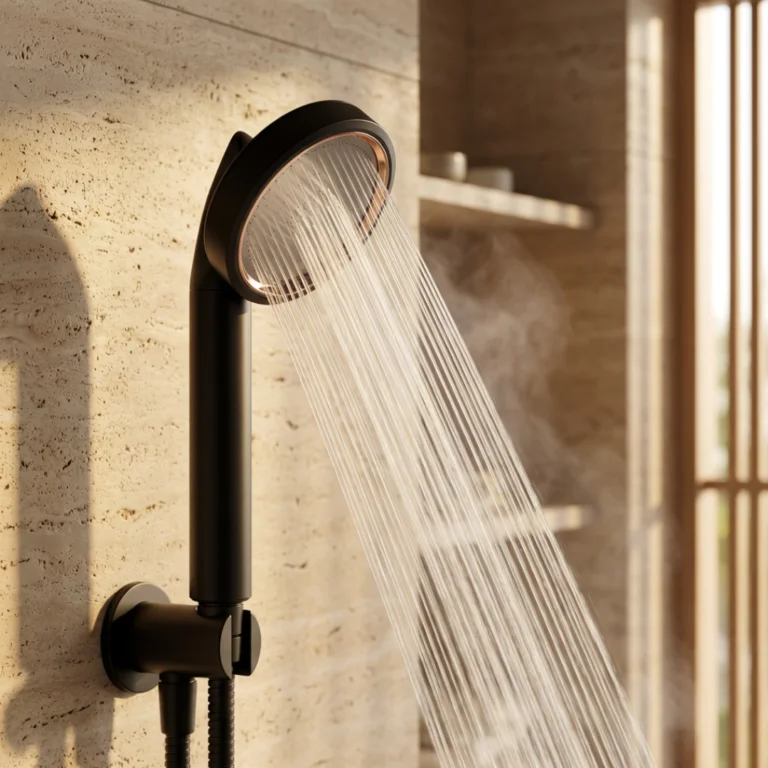
Best suited to washing hair, where you want even coverage and controllable direction, the handshower models carrying the vitamin C cartridge begin with the Nourish at S$99 and the Radiance at S$149, with the Aura overhead at S$249 for a full rainfall rinse. If the fittings are not yours to change, a retrofit filter that clips inline at S$49.90 runs the same chemistry. Worth knowing before you compare options: a water softener solves a problem Singapore does not have. Warranty covers functional parts only, not labour or transport.
What a realistic timeline looks like
Weeks one and two change how the rinse feels and how the cubicle smells. Nothing structural has happened yet.
Months one and two are when colour treated hair tends to report slower fading between salon visits, which is the first effect with a plausible mechanism behind it.
Months three to six are the real test. Hair grows about a centimetre a month, so this is the point at which you have several centimetres that only ever met filtered water, and you can compare it against the older length below. Keeping to a sensible replacement interval in this humidity is what decides whether that comparison means anything.
Frequently asked questions
Does Singapore water make hair dry?
Not through hardness, which averages 42.7 mg/L and is soft. The variable worth considering is the chlorine and chloramine residual, plus how often you wash.
Can damaged cuticles be repaired?
Not biologically. Conditioners and bond builders smooth and temporarily bind the surface, which improves how hair looks and behaves without restoring the original structure.
Why does my hair feel worse after swimming than after showering?
Pool water is chlorinated well above tap levels and you stay in it far longer. Same chemistry, much larger dose.
Will a filter stop colour fading?
It can reduce one contributor. Sun, heat styling, wash frequency and the dye itself all matter too, and no filter touches those.
Is filtered shower water better than a leave in treatment?
They are not competitors. One reduces exposure during the wash, the other protects the fibre afterwards.
What does the SUHAE cartridge actually do for hair?
It helps neutralise chlorine in the water passing over it. That is the claim, and it is deliberately smaller than the ones you will read elsewhere.
References
- PUB, Singapore Drinking Water Quality, January to December 2025
- PUB, Water Treatment
- Seki T et al., Journal of Dermatology, 2003 (PMID 12692355)
- Perkin MR et al., Journal of Allergy and Clinical Immunology, 2016 (PMID 27241890)
If your hair is coloured and you wash it most days, the handshower range is the sensible place to look first, and the Radiance spray pattern is the one worth comparing against your current head. We are happy to talk through fit before you buy, at admin@suhae.sg or +65 8988 1336.
