
Water Quality & Chlorine
Why Your Shower Water in Singapore Might Not Be as Clean as You Think
Apr
Quick answer: Is shower water clean in Singapore? By any drinking standard, yes. It is the same supply PUB certifies as meeting WHO guidelines, tested more than 500,000 times a year. What the headline is really pointing at is narrower and less dramatic: treated water is not empty water, it carries a disinfectant residual on purpose, and standing under 70 litres of it every day is a different kind of exposure from swallowing two.
This is the part of the topic where most articles overreach. It is easy to sell a filter by implying the tap is suspect, and it is also wrong. The more interesting version of the question leaves the safety argument alone entirely and asks what is in the water by design, and whether design intent for drinking matches what your skin meets in the shower.
What actually reaches your shower head
Treatment ends with disinfection, and then one further step that explains most of what follows. PUB puts it in a single sentence: ammonia is added to the treated water to form chloramines, a more stable chlorine residual. The residual is not a leftover or an oversight. It is deliberately maintained so that water stays protected across every kilometre between the works and your bathroom.
Published figures for January to December 2025 give an average total chlorine of 2.27 mg/L, ranging 1.43 to 2.87, with monochloramine averaging 2.10 mg/L. Total hardness averaged 42.7 mg/L and pH sat at 8.0. Read those numbers the right way round: they are evidence of a system working as intended, not of a problem. They also tell you exactly what your skin is meeting, which is the point.
Chloramine was chosen precisely because it lasts. Free chlorine fades as water travels; chloramine holds. In a high-rise city with service reservoirs, riser mains and rooftop tanks between the plant and the shower, that stability is what keeps the supply protected at the far end. It is also why treated water still carries chlorine at the point of use, hours and kilometres after treatment finished.
The part that is about your building, not the supply
PUB is responsible for water quality up to the point of supply. Everything after that, the internal pipework, the tank if your building has one, the tap and the shower head, belongs to the building owner or to you. This is the boundary people forget when they argue about water quality, and it is where genuine variation lives.
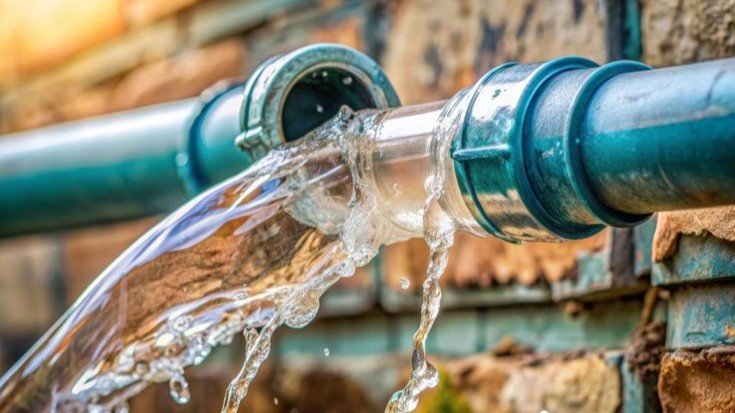
A corroded outdoor tap like the one above is a fixture problem, not a supply problem. The same distinction applies indoors. A guest bathroom used twice a month holds water in the pipe between uses. A shower head that has never been descaled in eight years accumulates deposit around the nozzles. Neither turns safe water unsafe, and both are worth attending to before blaming anything upstream.
The practical version: run a seldom-used shower for thirty seconds before getting in, soak the head in vinegar once or twice a year, and replace anything visibly corroding. That advice costs nothing and resolves a fair share of complaints on its own. Anyone who has read what usually goes unsaid about shower water here will recognise the pattern.
The objection: this sounds like fear-selling
It would be, if the argument were that the water is dirty. It is not. PUB conducts over 500,000 tests annually, its laboratory is accredited to ISO/IEC 17025 by SAC-SINGLAS, and the water meets WHO guidelines. Drink it from the tap. Give it to your children. None of that is in question here, and a brand that tells you otherwise is worth distrusting on everything else it says.
What is worth saying is that drinking standards answer a drinking question. They are built around ingestion of roughly two litres a day. A daily shower is ten minutes of warm water in continuous contact with skin and scalp, sixty to eighty litres of it, often twice a day in this heat. Safe to drink and optimal for that much skin contact are simply not the same claim, and only one of them has been evaluated on your behalf.
The published evidence on skin contact is limited and should be quoted carefully. Seki and colleagues, in the Journal of Dermatology in 2003, reported that chlorinated bathing water at 1.0 and 2.0 mg/L significantly reduced stratum corneum hydration in patients with atopic dermatitis. That is a result about atopic skin. It is not a result about the general population, and the chlorine and skin irritation question needs those limits stated every time it is raised.
Who this is for, and who it is not for
Not for you if your showers feel fine. No tightness, no itch, no smell, no complaint from your hair, then the water is doing its job and you are done. There is nothing to fix, and a filter would be an expense against a problem you do not have.
Also not for you if you are looking for whole-home water treatment. A shower filter treats one outlet. It does nothing for your kitchen tap, your washing machine or your drinking water, and it is not designed to. Anyone weighing a larger system should read how a shower filter compares with a softener in a Singapore home before spending, not least because softeners solve a hardness problem this country does not really have.
Worth considering if you have atopic or reactive skin, if you keep colour-treated hair, if you shower more than once a day, or if the chlorine smell in an unventilated bathroom is strong enough to notice on entry. And a boundary worth stating: this is a comfort measure. It treats nothing, cures nothing, and does not replace medical advice.
Practical steps, cheapest first
Lower the temperature until the water is warm rather than hot, since heat drives both the volatile fraction into the air and the moisture out of your skin. Shorten the shower. Descale the head. Moisturise while damp. Give that three weeks before concluding anything, because most people who try it in earnest need nothing further.
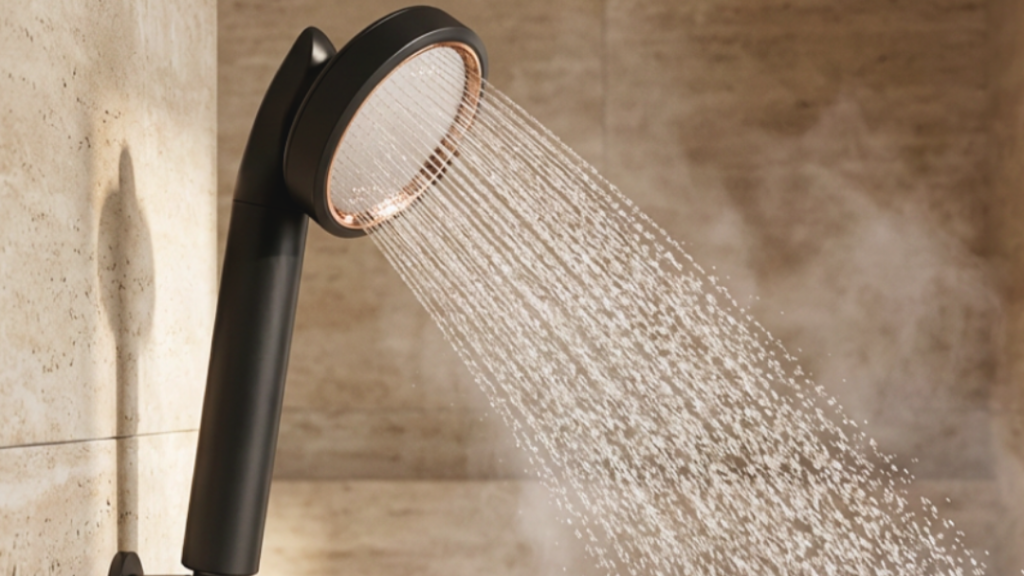
If the complaint survives all of that, the only remaining variable is the water in the last second before it lands on you. Threaded between a standard hose and the head you already own, a universal retrofit filter at S$49.90 is the least disruptive way to change it, and it fits ordinary HDB and condo fittings without a plumber.
Inside it, the Purea Core handles fine particulate and the Vitae Infusion cartridge carries 25,000 mg of vitamin C, which helps neutralise the chlorine residual as water passes through. Refills are S$29.90 each or two for S$50 with a Purea Core included, and each lasts two to three months. If you would rather replace the head outright, the Nourish sits at S$99 and the Radiance at S$149 with the Aera Flow plate for stronger perceived pressure at lower flow. Before deciding, it is worth knowing what a shower filter genuinely addresses and what it leaves alone.
Frequently asked questions
Is shower water clean in Singapore, and is it safe?
Yes. It is the same treated supply as your drinking water, which meets WHO guidelines and is monitored continuously. Nothing on this page should be read as suggesting otherwise. The discussion here is about comfort during prolonged skin contact, not about safety.
Why does my shower water smell of a swimming pool?
Chloramine, released by heat and by the spray breaking the stream into droplets, in a room with limited ventilation. The nose detects it far below any level of regulatory concern. The smell is a normal consequence of how the water is protected, not a warning sign.
Does Singapore have hard water that damages skin and hair?
No. PUB’s average total hardness of 42.7 mg/L classifies as soft, well below the threshold where hardness effects are usually discussed. Most limescale and mineral-film advice online was written for regions with genuinely hard supplies. The numbers put Singapore on the soft side.
Can I remove chlorine by boiling or by letting water settle?
Only partly, and not at shower volumes. Free chlorine off-gasses with heat and time; monochloramine, which is most of what is here, is far more stable. Boiling is less effective against chloramine than people expect, and nobody is boiling seventy litres before a shower.
Will a filter reduce my water pressure?
An inline filter adds a restriction, so flow rate does drop slightly. Perceived pressure depends more on nozzle design than on volume, which is why a well-designed spray plate can feel stronger on less water. Filters and pressure interact less dramatically than most people fear in a typical flat.
Does a SUHAE filter make water cleaner or just gentler?
Gentler is the fairer word. The water arriving at your flat already meets drinking standards, so the filter is not fixing contamination. It captures fine particulate through the Purea Core and helps neutralise the chlorine residual through vitamin C, which changes how the water feels rather than whether it is safe. Warranty covers functional parts only, not labour or transport.
References
- PUB, Singapore Drinking Water Quality, January to December 2025. pub.gov.sg
- PUB, Water Treatment. pub.gov.sg
- PUB, Water Quality. pub.gov.sg
- Seki T et al. Free residual chlorine in bathing water reduces the water-holding capacity of the stratum corneum in atopic skin. J Dermatol, 2003. PMID 12692355. pubmed.ncbi.nlm.nih.gov
Descale the head and turn the temperature down first, because those are free. If the shower still feels harsher than it should after a few weeks of that, the universal retrofit filters are the smallest change that alters the water itself.
